In brief
Long Island Judge Timothy Mazzei handed down the maximum punishment for Gilgo Beach serial killer Rex Heuermann: three life sentences for first‑degree murder and a 25‑year‑to‑life term for four second‑degree murders, all consecutive. The sentencing drama unfolded after a courtroom filled with angry statements from victims' families, who relayed decades‑long pain and devastation. Heuermann, a 62‑year‑old architect, had been convicted after DNA evidence linked him to the murders that spanned 1993‑2010. Police investigations spanned a decade, with recent reforms finally leading to his arrest in 2023. The case highlights long‑standing concerns about how victims, many of whom were sex workers, were treated and points to broader systemic failures.
Long Island Judge Timothy Mazzei handed down the maximum punishment for Gilgo Beach serial killer Rex Heuermann: three consecutive life sentences for first‑degree murder and a 25‑year‑to‑life term for four second‑degree murder charges, all running consecutively.
"You are a disgusting and despicable, small man, if you’re a man at all. And you’re a coward," the judge told Heuermann as the courtroom erupted in cheers.
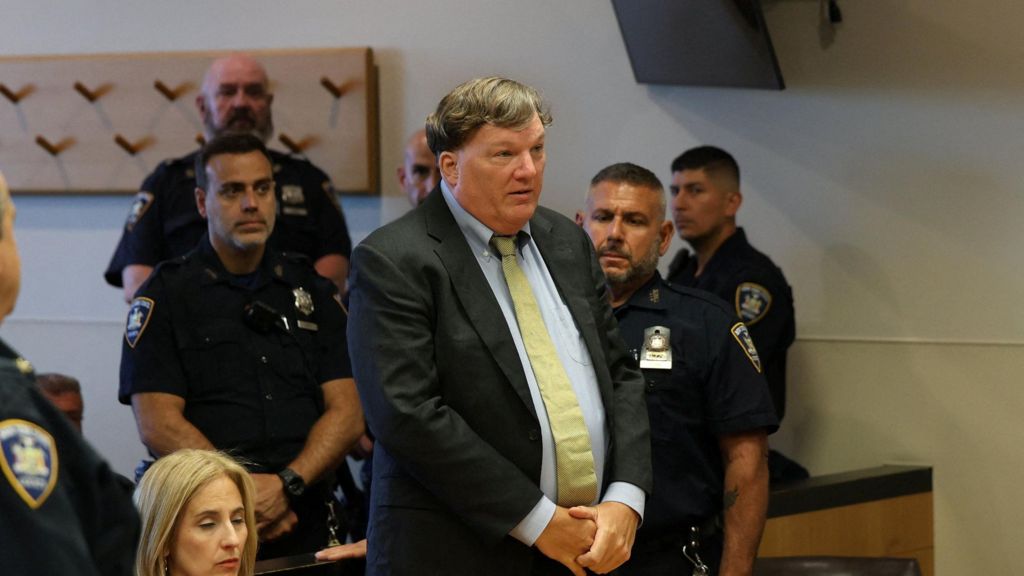
Heuermann, who appeared in a dark suit, blue shirt and grey tie, admitted responsibility for the brutal killings of eight women between 1993 and 2010, only to claim that at this point his words had “no meaning.” When the judge asked if he felt a little apology, he answered, “yes.”
The sentencing followed a wave of heart‑wrenching testimony from the families of the victims. Amanda, the sister of Melissa Barthelemy, recounted how Heuermann called her home after killing her sister and how her young brother had to endure the terrible news. She told the judge, "You can look at me when I’m talking to you. It’s been 17 years since we last spoke."
Her relatives and the broader community heard tales of smudged diaries, missing bodies and police delays, leaving a lasting legacy of sorrow. The court was moved when victims’ children spoke of the names of their mothers, each a woman who had worked as a sex worker in the area.
For years, the murders of Melissa Barthelemy (24), Megan Waterman (22), Amber Costello (27), Maureen Brainard‑Barnes (25), Jessica Taylor (20), Valerie Mack (24), Sandra Costilla (28) and Karen Vergata (34) stayed hot under the radar. Many witnesses waited over a decade for an investigation that would bring them the justice they needed.
Police finally identified Heuermann in 2023, when a DNA trace from a pizza box tied him to the unsolved killings. He was arrested after police burst into his Midtown Manhattan office, following a six‑week task force that joined federal and local investigators.
In practice, Heuermann’s sentencing marks a turning point for the families who have lived with grief. Suffolk County District Attorney Ray Tierney said, "I want them to get their revenge by going on to have wonderful lives…now it’s time for them to heal."
Beyond the courtroom, the case exposed whether the status of the victims—sex workers—may have contributed to delayed prosecutorial efforts. Residents rallied for more transparent policing and for a sector that can no longer stay silent in the face of such tragedy.