For residents of Puna, a remote and eclectic part of Hawaii’s Big Island, the killings of three men had a shocking resonance beyond a headline, a reminder of the many struggles the community faces.
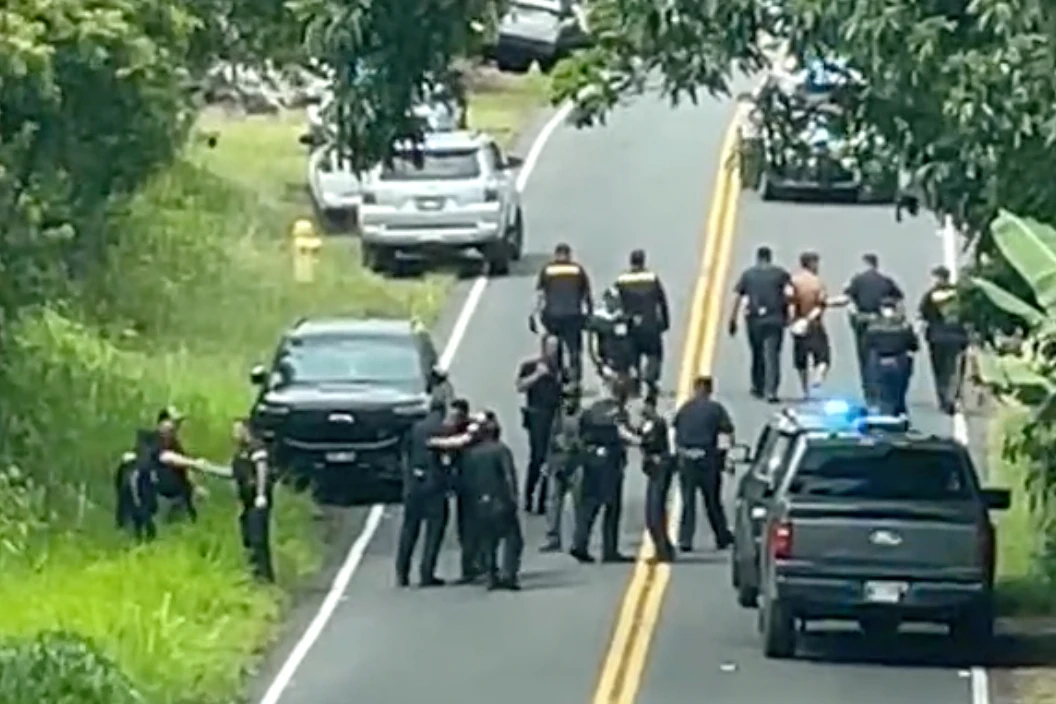
Nearly 24 hours after Jacob Baker was arrested, locals were desperate for answers about why investigators had singled out the 36‑year‑old as the prime suspect. Baker was already jailed on suspicion of murder, burglary and other charges, and a docket of repeated run‑ins with police was shown in court records. Residents who live in Puna told the Associated Press that the community’s concern about Baker had escalated in recent days, portraying him as increasingly threatening.
Baker is alleged to have been involved in the deaths of three men: Robert Shine, a 69‑year‑old found partially submerged in a cement pond; John Carse, another 69‑year‑old; and Chitta Morse, a 79‑year‑old whose body was located almost 20 miles away. Prosecutors had not yet filed formal charges after the arrests.
**Puna’s off‑grid lifestyle**
All three men moved to Puna for its off‑grid, tropical, and communal lifestyle. Shine, a past member of a nearby raw‑food commune, was known for dancing to drum circles every Sunday afternoon. He was last seen at a party a month back, swirling around a rock‑and‑roll band, the drummer Donald Hyatt recalled.
The men shared a passion for living sustainably. Morse, who had moved from Van Nuys, California 40 years ago to live “off‑grid and in a warm tropical place,” grew fruit in what was called a “fruit forest.” He cultivated coconut, avocado, and durian—selling the produce to community members.
**Work‑trade culture**
The people who live here often exchange labor for living space. Janelle Honer owns fruit‑growing property on Papaya Farms Road, where Baker had lived in swap for climbing and trimming coconut trees. “In Puna, we trade work for a place to stay,” Baker’s ex‑husband Stephen Shaffer said. Baker also allegedly returned to the cabin he had been living in, claiming “squatter’s rights” and threatening Honer.
Just days before the killings, two women filed temporary restraining orders against Baker for harassment and threats. The court denied the applications, citing insufficient proof.
**The murders and community impact**
Puna is one of the few places in Hawaii where land is affordable, yet the area has lagged in infrastructure and services. Ashley Kierkiewicz, a county council liaison for the community, said that while parts of the island are a resilient “quasi‑frontier,” “there’s a struggle with drugs, poverty and limited resources.” Long‑time resident Tiffany Edwards Hunt echoed the sentiment: “You can’t wonder that Hawaii will simply heal; it can either be kind or chew you out.”
The county had shuttered the raw‑food commune that served as a social hub for many of the victims, citing code violations. A memorial for the men is scheduled for Saturday at Honer’s property. Authorities believe the killings sent a sharp reminder of the darker underbelly behind the region’s idyllic reputation.
**Surveillance helps build the case**
Key evidence came from neighboring property owners Mark Wyatt and Richard Valdez. Their on‑site surveillance camera caught Baker on their property, sheriff’s office said. The footage showed him shirt‑less and barefoot, holding a dog and attempting to remain unseen as cars passed.
“She was literally ducking traffic, trying not to be seen,” Valdez told police. The footage helped place Baker in the vicinity of the crime scenes.
A short distance away from the footage, he was apprehended, found Sunday in a small cave. Authorities discovered that he had hidden near an ocean bluff—stashing stolen objects in a makeshift camp.
While the investigation is ongoing and charges have yet to be brought, Puna’s social fabric has been deeply shaken. Law enforcement, county officials, and community members are now grappling with an urgent need to balance their free‑spirited, low‑cost lifestyle against increasing safety concerns.
Collins reports from Hartford, Connecticut.
Nearly 24 hours after Jacob Baker was arrested, locals were desperate for answers about why investigators had singled out the 36‑year‑old as the prime suspect. Baker was already jailed on suspicion of murder, burglary and other charges, and a docket of repeated run‑ins with police was shown in court records. Residents who live in Puna told the Associated Press that the community’s concern about Baker had escalated in recent days, portraying him as increasingly threatening.
Baker is alleged to have been involved in the deaths of three men: Robert Shine, a 69‑year‑old found partially submerged in a cement pond; John Carse, another 69‑year‑old; and Chitta Morse, a 79‑year‑old whose body was located almost 20 miles away. Prosecutors had not yet filed formal charges after the arrests.
**Puna’s off‑grid lifestyle**
All three men moved to Puna for its off‑grid, tropical, and communal lifestyle. Shine, a past member of a nearby raw‑food commune, was known for dancing to drum circles every Sunday afternoon. He was last seen at a party a month back, swirling around a rock‑and‑roll band, the drummer Donald Hyatt recalled.
The men shared a passion for living sustainably. Morse, who had moved from Van Nuys, California 40 years ago to live “off‑grid and in a warm tropical place,” grew fruit in what was called a “fruit forest.” He cultivated coconut, avocado, and durian—selling the produce to community members.
**Work‑trade culture**
The people who live here often exchange labor for living space. Janelle Honer owns fruit‑growing property on Papaya Farms Road, where Baker had lived in swap for climbing and trimming coconut trees. “In Puna, we trade work for a place to stay,” Baker’s ex‑husband Stephen Shaffer said. Baker also allegedly returned to the cabin he had been living in, claiming “squatter’s rights” and threatening Honer.
Just days before the killings, two women filed temporary restraining orders against Baker for harassment and threats. The court denied the applications, citing insufficient proof.
**The murders and community impact**
Puna is one of the few places in Hawaii where land is affordable, yet the area has lagged in infrastructure and services. Ashley Kierkiewicz, a county council liaison for the community, said that while parts of the island are a resilient “quasi‑frontier,” “there’s a struggle with drugs, poverty and limited resources.” Long‑time resident Tiffany Edwards Hunt echoed the sentiment: “You can’t wonder that Hawaii will simply heal; it can either be kind or chew you out.”
The county had shuttered the raw‑food commune that served as a social hub for many of the victims, citing code violations. A memorial for the men is scheduled for Saturday at Honer’s property. Authorities believe the killings sent a sharp reminder of the darker underbelly behind the region’s idyllic reputation.
**Surveillance helps build the case**
Key evidence came from neighboring property owners Mark Wyatt and Richard Valdez. Their on‑site surveillance camera caught Baker on their property, sheriff’s office said. The footage showed him shirt‑less and barefoot, holding a dog and attempting to remain unseen as cars passed.
“She was literally ducking traffic, trying not to be seen,” Valdez told police. The footage helped place Baker in the vicinity of the crime scenes.
A short distance away from the footage, he was apprehended, found Sunday in a small cave. Authorities discovered that he had hidden near an ocean bluff—stashing stolen objects in a makeshift camp.
While the investigation is ongoing and charges have yet to be brought, Puna’s social fabric has been deeply shaken. Law enforcement, county officials, and community members are now grappling with an urgent need to balance their free‑spirited, low‑cost lifestyle against increasing safety concerns.
Collins reports from Hartford, Connecticut.