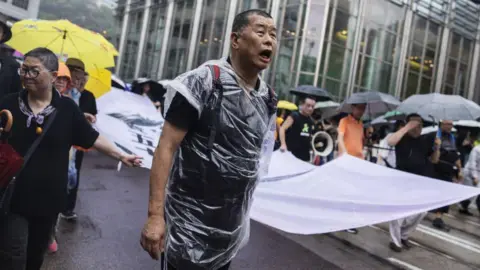
Hong Kong pro-democracy campaigner and media tycoon Jimmy Lai has been found guilty of colluding with foreign forces under the city's controversial national security law (NSL). The 78-year-old UK citizen, who has been in jail since December 2020, pleaded not guilty and faces life in prison with sentencing expected early next year.
Lai used his now-defunct Apple Daily newspaper as part of a wider effort to lobby foreign governments to impose sanctions on Hong Kong and China, the court found. Hong Kong chief executive John Lee welcomed the verdict, noting that Lai's actions 'damaged the country's interests and the welfare of Hong Kongers.' Rights groups have slammed the ruling as 'a cruel judicial farce'.
Critics argue that the NSL, which Beijing defends as essential for stability, is a tool for crushing dissent. In delivering the verdict, Judge Esther Toh emphasized that Lai 'harbored hatred' for the People’s Republic of China (PRC), referencing his repeated invitations to the US to intervene in Hong Kong's governance.
The ruling will have wide implications, as Lai becomes one of many pro-democracy figures sentenced under the NSL, which has faced international scrutiny for its perceived violations of human rights and civic freedoms. Lai's trial is seen as a crucial test for judicial independence in Hong Kong, with concerns that the courts have aligned increasingly with Beijing's directives.
The outcome of Lai's case is expected to resonate beyond Hong Kong, influencing international relations and ongoing discussions surrounding human rights and autonomy in the territory. Critics and foreign governments urge the release of Lai, viewing his prosecution as politically motivated suppression of dissent in the face of a growing authoritarian grip on civil liberties in Hong Kong.
Lai used his now-defunct Apple Daily newspaper as part of a wider effort to lobby foreign governments to impose sanctions on Hong Kong and China, the court found. Hong Kong chief executive John Lee welcomed the verdict, noting that Lai's actions 'damaged the country's interests and the welfare of Hong Kongers.' Rights groups have slammed the ruling as 'a cruel judicial farce'.
Critics argue that the NSL, which Beijing defends as essential for stability, is a tool for crushing dissent. In delivering the verdict, Judge Esther Toh emphasized that Lai 'harbored hatred' for the People’s Republic of China (PRC), referencing his repeated invitations to the US to intervene in Hong Kong's governance.
The ruling will have wide implications, as Lai becomes one of many pro-democracy figures sentenced under the NSL, which has faced international scrutiny for its perceived violations of human rights and civic freedoms. Lai's trial is seen as a crucial test for judicial independence in Hong Kong, with concerns that the courts have aligned increasingly with Beijing's directives.
The outcome of Lai's case is expected to resonate beyond Hong Kong, influencing international relations and ongoing discussions surrounding human rights and autonomy in the territory. Critics and foreign governments urge the release of Lai, viewing his prosecution as politically motivated suppression of dissent in the face of a growing authoritarian grip on civil liberties in Hong Kong.