Warning: This report contains details of physical and sexual abuse and discussion of suicide.
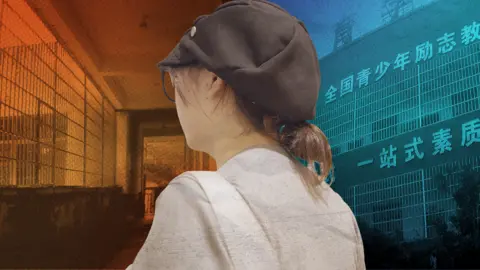
Baobao's heart still races when she smells soil after morning rain. It takes her back to early military drills behind locked gates - and the constant fear that marked every one of her days at Lizheng Quality Education School. For six months, aged 14, she barely left the red and white building in a remote Chinese village where instructors tried to fix young people whose families considered them rebellious or problematic. Students who failed to comply were beaten so severely they could not sleep on their backs or sit down for days, she says. Every single moment was agonising, says Baobao, now 19 and speaking under a pseudonym for fear of retribution. She says she considered suicide, and knows other students who attempted it.
A BBC Eye investigation has uncovered multiple allegations of physical abuse in the school and others in the same network, and cases of young people being abducted and taken to the institutions. Corporal punishment has been banned in China for decades, but testimony from 23 former students indicates systematic beatings and extreme physical discipline being enforced. Some students recall instructors posing as authorities to forcibly transfer young people to the facilities, raising alarms about accountability and regulation in what appears to be a booming industry targeting troubled youth.
The booming industry promises anxious parents that military-style discipline will resolve their worries about disobedience, internet addiction, depression, or identity issues. However, severe allegations of abuse and lack of transparency in operations continue to plague these institutions, leaving families vulnerable and helpless.
Dr. Yichen Rao, an anthropologist, links the surge in disciplinary schools to societal pressures on families for recognized educational success, which, particularly in urban middle-class contexts, leads parents to consider these controversial and unregulated schools as a last resort. Yet, former students like Baobao and a teen named Enxu, now both speaking out against such institutions, paint a disturbing picture of abuse, deception, far from the legitimate help they were promised.
As pressure builds from students and their advocates, there's a pressing need for a regulatory review of these institutions. The haunting experiences of Baobao and Enxu serve as a critical reminder of the dangers lurking in these ostensibly supportive environments, fueling calls for better protective measures for vulnerable youth in China.