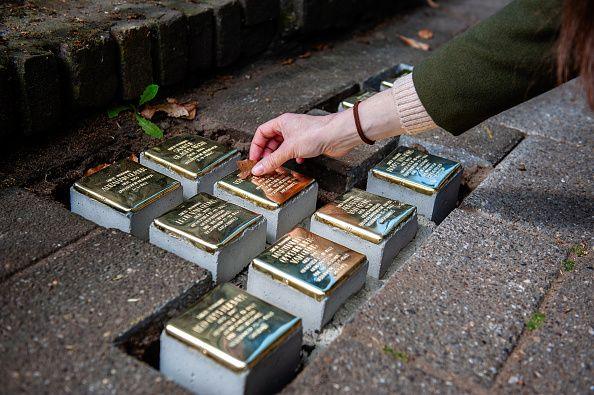

The municipality of Heidenau, situated near Dresden in Saxony, has voted to prohibit the placement of Stolpersteine—small brass plaques embedded into sidewalks—within its streets. The motion, carried with support from the Alternative für Deutschland and the conservative CDU, reflects concerns that the memorials are inappropriate for the local public space.
Education Minister Karin Prien, a member of the CDU, slammed the decision as scandalous and urged that remembrance should remain in the open. She accused the parties in charge of the vote of prioritising death over life by relegating Holocaust remembrance to a cemetery.
Stolpersteine have been placed across Europe since the 1990s to honour Jewish victims and other Nazi atrocities. They are typically funded by private donations and positioned outside former homes or workplaces of those who suffered under the regime.
The AfD in Saxony has been classified by German intelligence as an extreme‑right party, a label the group denies. Despite this, the party’s success in recent state elections has emboldened its policymakers, according to observers.
Opposition voices, including Holocaust survivor Charlotte Knobloch, president of the Jewish Community in Munich, described the ban as an attempt to erase Jewish presence from the cityscape. She emphasised that decentralised remembrance should permeate everyday life rather than be removed from public view.
The controversy underscores growing division over how Germany should confront its Nazi history and how collective memory is expressed through public art.