In brief
Greenland’s 1966‑70 forced contraception programme, involving over 4,500 Inuit women, has triggered an ongoing debate over whether it constitutes genocide. Two expert reports issued Friday offer divergent conclusions: one acknowledges rights violations but stops short of labeling it genocide, while the other admits the possibility yet finds no clear intent to destroy a population. Denmark has already apologized and introduced a compensation scheme, and Greenland’s authorities plan a reconciliation commission. Personal testimonies underscore the lasting physical and psychological harm.
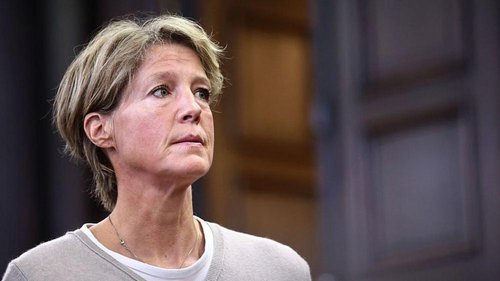
Greenland’s justice minister, Marianne Paviasen, has openly stated that the government cannot yet declare whether the 1966‑70 birth‑control campaign constituted genocide. The claim follows the release of two expert reports that evaluate the forced intra‑uterine device (IUD) program, a system that saw 4,500 Inuit women—some as young as 13—receive contraceptives without consent.
Background of the Program
The Danish‑run kingdom introduced the “birth‑control campaign” to curb what it deemed explosive fertility growth. From 1966 to 1970, Danish doctors implanted IUDs, reducing Greenland’s fertility rate from seven children per woman to 2.3 within eight years. The policy remains controversial as Greenland’s population growth slowed dramatically and many women suffered lasting health issues.
The Two Reports
The panel of four experts, tasked by Greenland’s authorities, split into two findings. The first report, authored by lawyer Dalee Sambo Dorough and law professor Miriam Cullen, concluded that human rights were violated but could not affirm genocide based solely on contraceptive practices. They noted that Danish intent—such as relocating Inuit children—might be a “possible inference” worthy of further legal scrutiny.
A separate report by former Danish Institute for Human Rights head Jonas Christoffersen and psychologist Jensine Nedergaard mirrored much of the first but stressed that no authority intended to destroy Greenland’s population. The stark contrasts in wording drew criticism from Greenland’s justice minister, who highlighted the divergent tone: “One report says there was no genocide at all; the other says there could have been.”
Government Response and Apology
Denmark formally apologized last August, describing the policy as “systematic discrimination.” A compensation law now pays each affected woman 300,000 Danish crowns (about £34,000). Greenland’s Prime Minister, Jens‑Frederik Nielsen, announced a reconciliation commission to pursue collaborative steps with Denmark.
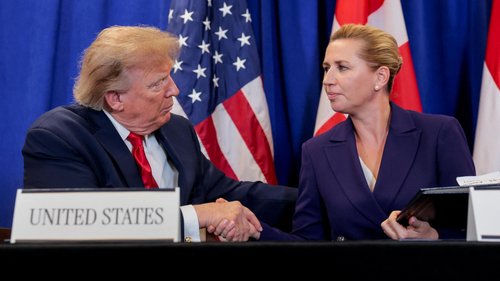
Danish Prime Minister Mette Frederiksen echoed the sentiment, “We will handle the political process together with the government of Greenland. The most important thing is that we find the right path together.”
Personal Narratives
Henriette Berthelsen, one of the victims, implied that the investigations were biased from the outset because no Inuit expert was included. She asserted, “For me, this is not just about history or politics. It’s my body, my life and my right to self‑determination.”
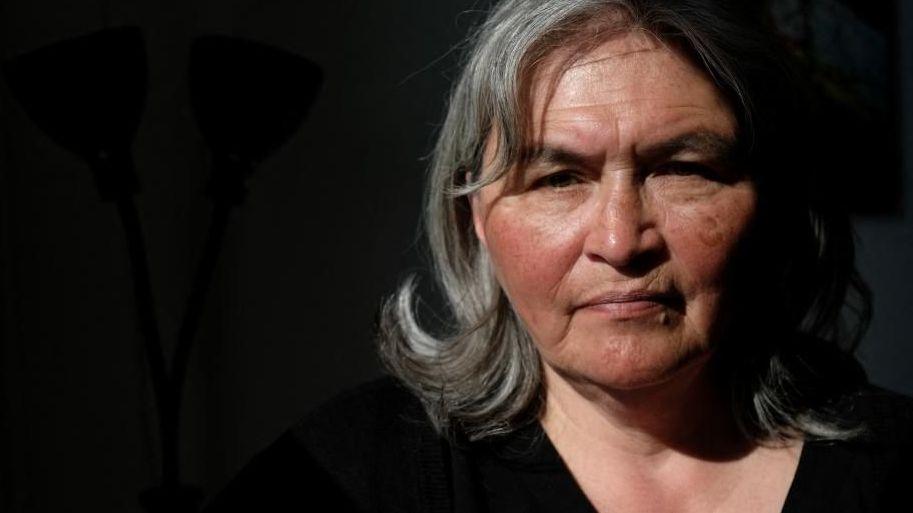
“We were treated like animals,” said 70‑year‑old Inger Platou. “Without consent, they just wanted to stop women from giving birth… it was a very inhumane act.”
Platou’s complications left her infertile; she adopted two children from Colombia but acknowledged the lingering trauma. “We are very deferential to authority because we are colonial children,” she added.
Looking Ahead
With the reports still a point of contention, Greenland and Denmark face a challenging path toward reconciliation. The discourse now hinges on whether the forced contraception can be legally framed as genocide, raising questions about accountability, reparations, and the safeguarding of Indigenous rights.
Image credit: Reuters – Inger Platou, one of those who says Inuit women were “treated like animals.”