In brief
Greenland’s government cannot yet confirm whether the 1960s‑70s birth‑control programme constituted genocide against Inuit women, after two diverging independent reports were issued. The Justice Minister said the findings are still up for debate, while Denmark has compensated victims with a compensation law. Historical context shows the programme fell in the wake of Danish colonial rule and a heavily monitored population growth. Victims describe the IUD implantation as a violation of bodily autonomy, igniting calls for full accountability. Both Greenland and Denmark pledge continued cooperation on the political and humanitarian process.

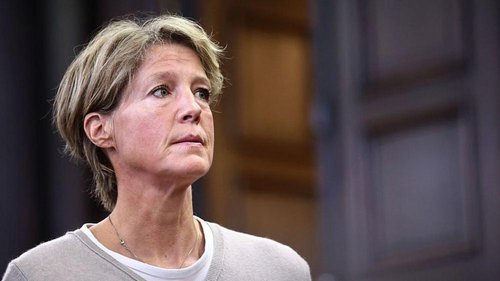
Greenlandic Justice Minister Marianne Paviasen said the government could not say whether a genocide had been committed through forced contraception in the 1960s and 70s.
The decision remains unsettled.
Greenland’s justice minister declined, with the assessment of two independent reports to be broadcast as said “We can continue to debate.”
The reviews came a year after Denmark issued its own apology to the Inuit population for the treatment of women and girls. Both reports accompany a compensation law giving every woman 300,000 Danish crowns (£34,404; $46,800).
Archives reveal that between 1966 and 1970 roughly 4,500 Greenlandic women, some as young as 13, received an intra‑uterine device (IUD) under a Danish state‑run birth‑control programme. In recent years, survivors’ve claimed they were fitted without consent.
The programme was so extensive that Greenland’s fertility rate dropped from 7 child per woman to 2.3 within a decade. The intentional suppression of births falls under one definition of genocide in the UN Convention.
A panel of four experts was set up to evaluate human‑rights violations. Two resign, producing a separate report. The remaining two, Dalee Sambo Dorough and Miriam Cullen, concluded that human‑rights violations had occurred but could not confirm genocide based on contraceptive practices alone.
The rival report, by former Danish human‑rights head Jonas Christoffersen and psychologist Jensine Nedergaard, accepted that women had been wronged but found no evidence the authorities intended to destroy the population.
Victim voices highlight the personal scars.

Inger Platou, one of the Inuit women who says she received a contraceptive device without consent.
‘It turns out we were treated like animals,’ she recalls, describing an IUD inserted without consent that left her unable to become pregnant. She adopted two Colombian children.
The political backlash is escalating. Prime Minister Mette Frederiksen pledged joint action with Greenland’s government, while Prime Minister Jens‑Frederik Nielsen set up a reconciliation commission.
The colonial legacy continues to shape healthcare; Copenhagen oversaw Greenland’s medical system until 1992. The birth‑control campaign was part of an effort to curb what Danish authorities termed a runaway population growth.
Today, the debate over whether the policy reached the threshold of genocide remains live and contested. Greenland’s governments, victims, and international observers are watching closely as both sides prepare to move forward, perhaps into legal action or further reconciliation.