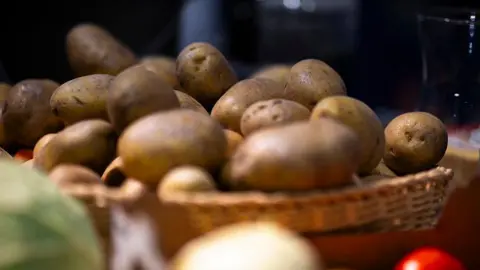
A vast stockpile of potatoes is being given away for free in Germany, after a farm in Saxony benefited from a bumper harvest. Thousands of tasty tubers have been rolling into the country's capital, Berlin, since mid-January, with residents risking icy streets to bag their share. Dubbed 'the great potato rescue', it is part of a plan to stop about 4 million kg (8.8 million lb) of surplus spuds from going to ruin. Food banks, schools, and churches are among the beneficiaries, according to organizers.
However, the enterprise was labelled a 'disgusting PR stunt' by the Brandenburg Farmers' Association, which lamented the impact on local markets. Germany is the European Union's potato-producing capital, and last year's harvest has left the market saturated. Peter Schink, editor of Berliner Morgenpost, stated the initiative is about 'putting the potato in the spotlight as a valuable food.' The newspaper collaborated with the eco-friendly search engine firm, Ecosia, to coordinate and fund the distribution of the spuds.
Not wishing to discard its 'magnificent tubers' back into the fields, Osterland Agrar has reportedly bussed around 500,000kg to Berlin and other parts of Germany and Ukraine. Hans-Joachim von Massow, Managing Director of Osterland Agrar, mentioned they can store them until mid-year. But not everyone is celebrating: Timo Scheib from the Brandenburg Farmers' Association noted, 'Food is and will remain valuable, even if thoughtless do-gooders throw around free potatoes.'
In Berlin, a special website lists 174 spud-hubs in and around the capital. Despite some efforts being hampered by accessibility issues, the initiative has captured media attention across Germany. As the influx of potatoes from Saxony gradually slows down due to dwindling funding, one more truckload is anticipated once the weather warms up. This initiative highlights Germany's cultural affinity for potatoes amidst efforts to mitigate food waste.
However, the enterprise was labelled a 'disgusting PR stunt' by the Brandenburg Farmers' Association, which lamented the impact on local markets. Germany is the European Union's potato-producing capital, and last year's harvest has left the market saturated. Peter Schink, editor of Berliner Morgenpost, stated the initiative is about 'putting the potato in the spotlight as a valuable food.' The newspaper collaborated with the eco-friendly search engine firm, Ecosia, to coordinate and fund the distribution of the spuds.
Not wishing to discard its 'magnificent tubers' back into the fields, Osterland Agrar has reportedly bussed around 500,000kg to Berlin and other parts of Germany and Ukraine. Hans-Joachim von Massow, Managing Director of Osterland Agrar, mentioned they can store them until mid-year. But not everyone is celebrating: Timo Scheib from the Brandenburg Farmers' Association noted, 'Food is and will remain valuable, even if thoughtless do-gooders throw around free potatoes.'
In Berlin, a special website lists 174 spud-hubs in and around the capital. Despite some efforts being hampered by accessibility issues, the initiative has captured media attention across Germany. As the influx of potatoes from Saxony gradually slows down due to dwindling funding, one more truckload is anticipated once the weather warms up. This initiative highlights Germany's cultural affinity for potatoes amidst efforts to mitigate food waste.