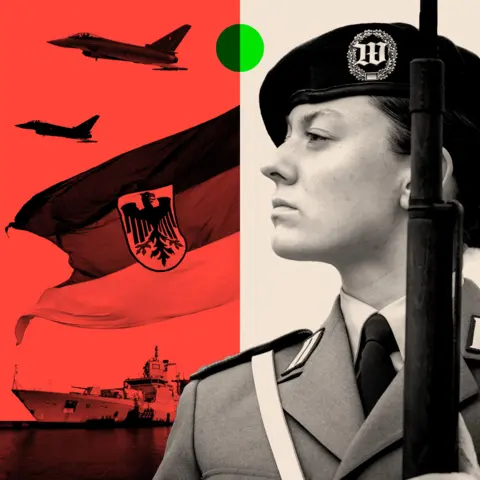
General Carsten Breuer is a man in a hurry. As head of Germany's armed forces, he holds the crucial task of quickly expanding the nation’s military strength, transforming it potentially into Europe’s most formidable fighting force.
Breuer expresses concerns over Russia's ongoing military buildup, believing it could enable an attack on NATO territories by 2029. I've never experienced a situation which is as dangerous, as urgent, as it is today, he noted during an interview at a military base in Munster.
The planned military expansion includes a significant increase in Germany’s defense budget from €95bn in 2025 to €162bn in 2029—polls indicate strong public support for this rearmament initiative.
Historically, Germany's military strength has raised alarms among its neighbors, due to the horrific consequences of its previous militaristic endeavors in the 20th century. Following World War II, Germany maintained a suppressed military posture, aiming to atone for its violent past. However, the current geopolitical climate has necessitated a cultural shift, urging Germany to reconsider its approach and embrace a different military role.
Exemplifying this change, Germany has established a permanent military presence in Lithuania—an explicit move away from its past of wartime occupation. Currently, approximately 1,200 German troops are stationed in Lithuania, with plans to increase that figure almost five-fold by the end of 2023.
Following Russia's aggression in Ukraine and perceived vulnerabilities highlighted by this conflict, Germany's armed forces are set to engage in a broader military buildup. Breuer plans to boost the army’s personnel from 182,000 to 242,000 and potentially revive conscription should recruitment efforts fall short.
Despite Germany's historic reluctance to embrace military might, the current leadership under Chancellor Friedrich Merz acknowledges the country’s role must evolve to provide necessary stability within Europe. As such, Germany seeks operational independence from the United States, emphasizing a self-reliant defense posture that aligns with its economic strengths and responsibilities to NATO.
This evolving identity reflects a transformed perception of Germany’s military role, shifting from a reclusive decliner to a proactive leader in European defense.
Breuer insists that preparing for potential conflicts is essential for deterrence, stating, What I'm doing is to prepare Germany to defend itself, building up those defense capabilities. This is deterrence for us. We will deter the threat from the Russian side. As NATO reshapes its stance in an altered security landscape, all eyes are now on Germany to see how it will embrace its renewed military potential.