In brief
Serhii Kuznetsov, a Ukrainian serviceman, is on trial in Hamburg for masterminding the 2022 explosions that ruptured three Nord Stream pipelines. German prosecutors say the attacks were ordered by Ukrainian authorities and aim to curtail Russia’s war‑financing. The case, the first to be heard after years of international negotiations, also involves a second suspect pursued by Italy and Poland. Despite Ukraine’s denial of any role, German courts insist on jurisdiction, citing the attacks as war crimes that threaten internal security. The trial underscores the complex legal and political interplay between Germany, Ukraine, and the broader European Union.
In a historic move, Germany opened a courtroom in Hamburg to try Serhii Kuznetsov, a Ukrainian national accused of orchestrating the 2022 destruction of three Nord Stream gas pipelines that brought Russian fuel to Europe.
Prosecutors assert that Kuznetsov, a former army officer, led a team of divers, a boat captain and an explosives specialist to carry out the attacks. They argue the sabotage was ordered by Ukrainian state agencies as a strategic measure against Russia’s war economy. The indictment labels the act a war crime, describing it as an attack on a civilian energy infrastructure.
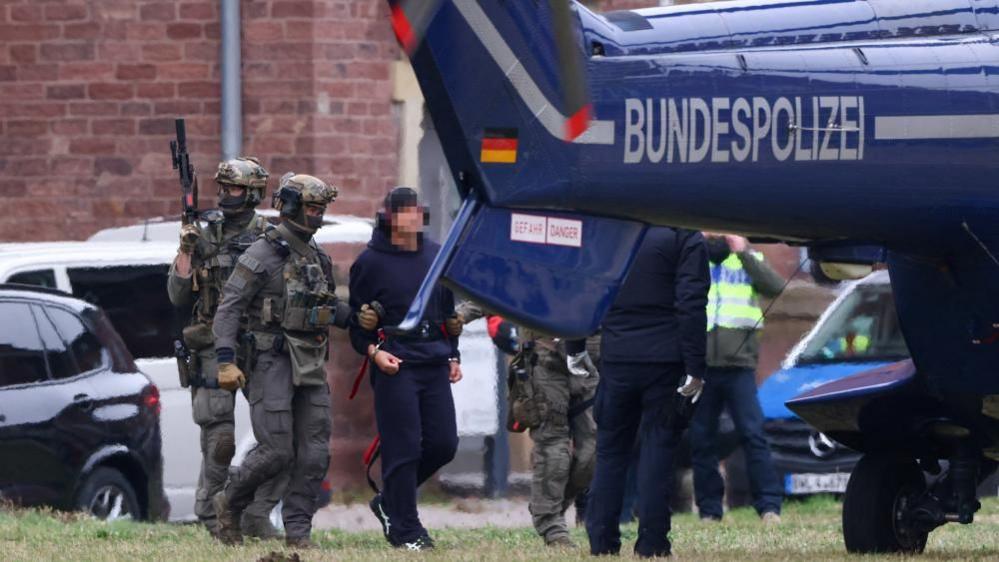
Kuznetsov’s extradition to Germany followed a turbulent legal saga. He was arrested in an Italian hotel in August 2025 after a European arrest warrant was issued. After weeks of court battles in Italy, he was transferred to German custody late last year, making him the first suspect to stand before a German court.
The trial arrives amid a broader diplomatic ripple. While Ukraine’s president maintains that Kyiv had no role in the blasts, some Ukrainian officials have indicated the plot was conceived “by order of Ukrainian state agencies.” In contrast, a Polish judge recently refused to hand over a second suspect, Volodymyr Zhuravlov, asserting the attack was justified as an act of war.
German prosecutors argue that the incidents fall under the country’s jurisdiction because they threaten internal security and involve international law. A federal court ruling in January 2025 confirmed this stance, obligating German authorities to prosecute the case.
The case highlights the fragile back‑channel dynamics between Berlin and Kyiv. Ukrainian representatives see the trial as a political lever, while German officials emphasize depoliticising the proceedings and focusing on lawful restraint.
For full coverage of the trial and the broader implications on European energy security, stay tuned to OnPoint, where we provide live updates and expert analysis.