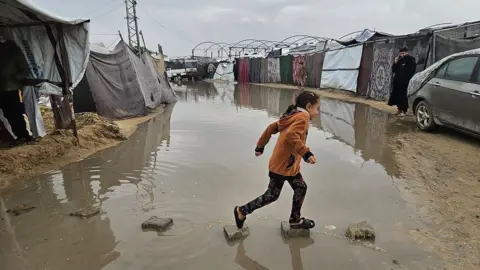
More than 800,000 Gazans are at risk from flooding, the UN says, as a powerful winter storm sweeps through the Strip.
The heavy rain has already deluged camps and caused several buildings to collapse.
A steady stream of water trickles through openings in the tent Ghadir al-Adham shares with her husband and six children in Gaza City. Her family is still displaced after the war and is waiting for reconstruction to begin.
Here we are, living a life of humiliation, she told the BBC. We want caravans. We want our homes rebuilt. We long for concrete to keep us warm. Every day I sit and cry for my children.
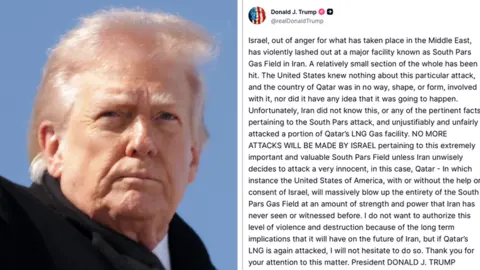
Two months into an American-imposed ceasefire, Gaza remains stuck in the first phase of Donald Trump's peace plan, its territory divided among the warring parties and its people still displaced amid rubble.
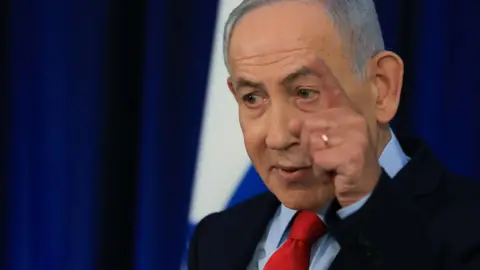
Plans for new homes and a new government lie frozen as the search continues for Israel's last remaining hostage, Ran Gvili. Israel's Prime Minister, Benjamin Netanyahu, has insisted Hamas must return all of Israel's hostages - living and dead - before any progression in peace talks occurs.
The uncertainty leaves both Israel and Hamas at a standstill, with difficult concessions ahead, including disarming Hamas and transferring control to an international force, which neither side is currently willing to entertain.
Political pressures complicate the process, especially for Israel's government, as they are fully aware of the implications of proceeding without resolving the hostage crisis. Families of the missing seek reassurance from their leaders that no steps will be taken without a positive outcome for their loved ones.
As the storm rages, it serves as a metaphor for the larger chaos enveloping Gaza, leaving many fearing a future that remains precariously uncertain amidst both environmental disasters and political stalemate.