In brief
A new study reveals that the remains of at least 37 individuals found at Charterhouse Warren in southwest England show signs of violent deaths and potential consumption.
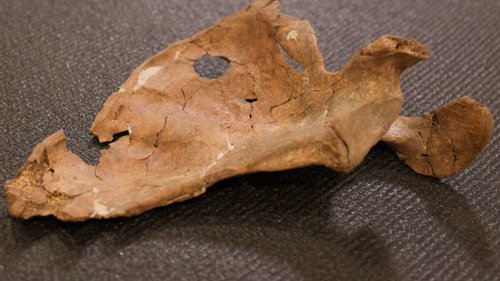
In a shocking archaeological revelation, bones recovered from a mass grave in southwest England indicate that the remains belong to at least 37 individuals, likely victims of violence and perhaps even cannibalism. The discoveries, unearthed from a 50-foot shaft at Charterhouse Warren Farm and detailed in a recent study published in the journal Antiquity, highlight a darker side of human behavior during the Bronze Age.The site, initially uncovered by cavers over 50 years ago, had long been overlooked, thought to merely represent a standard gravesite containing scattered bones amid sediment. However, Professor Rick Schulting from Oxford University has led a study that paints a much grimmer picture. “It’s taken us all aback. It was completely unexpected, totally atypical for the period and for almost all of British prehistory,” he remarked regarding the findings.The remains date back to around 2210 to 2010 B.C., and numerous bones exhibit severe blunt force trauma and slicing marks, suggesting a ritualistic aspect to the violence. The notion that this represents a ceremonial feast post-massacre adds a chilling layer to the archaeological narrative. The evidence is unprecedented for such a period, challenging current perceptions surrounding social practices in prehistoric Britain.Despite the site's discovery in 1970, the lack of trained archaeologists initially meant a considerable gap in detailed record-keeping, leaving much of the site mysterious until now. As excavation techniques and historical awareness evolve, Charterhouse Warren may reveal further insights into the complexities of early human societies, particularly regarding violence and ritual.This research not only marks a pivotal moment in understanding the past but also invites a re-examination of archaeological narratives about human behavior in ancient societies.