The EU has reached a free trade agreement with Brazil, Argentina, Paraguay, and Uruguay, 25 years after talks began and despite opposition from farmers in several European countries.
The deal with the Mercosur trading bloc will require the approval of the European Parliament within the next few months.
Brazil's President Luiz Inácio Lula da Silva hailed it as a historic day for multilateralism after the four South American countries finalized the deal in Brussels.
This agreement is set against the backdrop of escalating tariffs imposed by US President Donald Trump and tensions in Venezuela.
According to the EU, this marks the largest free trade accord to date, described as a win-win for both regions, although critics fear that an influx of cheap imports could undermine European farmers.
In light of these concerns, President Lula stated that this agreement serves as a message for international commerce in a climate of growing protectionism. EU Commission President Ursula von der Leyen believes it will offer meaningful benefits to consumers and businesses on both sides.
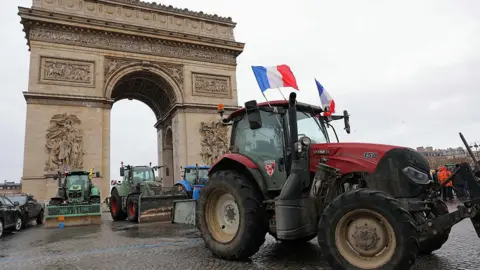
Protests occurred across Europe, particularly in France and Belgium, with farmers expressing deep concerns about the deal's potential damage to their livelihoods. Judy Peeters from a Belgian farmers' group noted the anger and pain felt amongst farmers.
The EU Commission assured that it had addressed farmers' concerns by introducing safeguards within the agreement to protect their interests.
In addition to enhancing trade and political engagement, the agreement is anticipated to aid climate change efforts by committing to halt deforestation and maintain a reliable supply of critical raw materials.
The EU expects local companies to save approximately €4 billion annually in export duties through this agreement, with South American nations rich in valuable minerals essential for renewable technologies.
Cecilia Malmström, the former European trade commissioner, indicated that parts of the agreement could be suspended if Mercosur countries fail to adhere to environmental protections.
This deal has garnered broad backing from EU member states, yet still awaits the European Parliament's vote, expected to be closely contested. Macro-economically, experts project a minimal impact, estimating a mere 0.05% increase in EU economic output.