EU Leaders to Decide on Loaning Frozen Russian Assets to Ukraine
European Union leaders begin two days of talks in Brussels focusing on the momentous decision to loan tens of billions of euros in frozen Russian assets to Ukraine to fund its military and economic needs.
Most of Russia's €210bn worth of assets in the EU are held by a Belgium-based organization called Euroclear. Currently, Belgium and other EU members oppose using these funds. Without additional funding, Ukraine's financial resources are expected to run out within months.
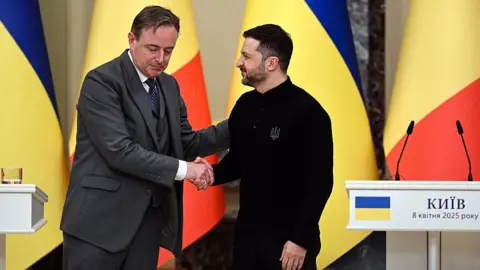
Amid concerns from some member states, including Belgium's Prime Minister Bart De Wever, the European Commission is proposing a loan to Kyiv of around €90 billion over the next two years, which would address a large portion of the funds Ukraine needs as it navigates ongoing conflicts and peace discussions.
Russia has responded with legal actions, attempting to reclaim its frozen assets, and has warned the EU against utilizing these funds for Ukrainian aid.
As the summit unfolds, differing opinions among EU nations could lead to contentious debates. Countries like Hungary and Slovakia express skepticism, particularly regarding the loan's implications for military provisioning versus reconstruction efforts.
Thus far, the EU has only provided Ukraine with the interest generated from frozen assets, highlighting the urgency of maintaining financial backing to support Ukraine's defense efforts.
German Chancellor Friedrich Merz has advocated leveraging the Russian assets, emphasizing that doing so would send a strong message to Moscow.
Whatever the conclusion of these discussions, the outcome is crucial for Ukraine's ongoing struggle and for the broader implications it will have on EU-Russian relations.