In brief
In the ongoing civil war in Sudan, countless refugees are fleeing deadly airstrikes aimed at military targets but impacting civilians instead. As violence escalates, a significant influx of displaced individuals is seeking refuge and medical assistance across the border.
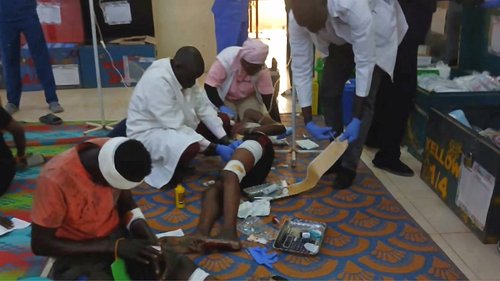
While the Sudanese Armed Forces clash with the Rapid Support Forces (R.S.F.), airstrikes have become a traumatic reality for many. Ten-year-old Isah Abdallah Fadul, who was injured last year during an airstrike in Darfur, exemplifies the plight of those caught in the conflict's crossfire. Recently, Isah and her family reached a Doctors Without Borders clinic, desperately seeking medical care amid the chaos.With a civil war now approaching its third year, the humanitarian crisis continues to deepen, emphasized by recent U.N. reports linking airstrikes and growing fatalities. Refugees are evacuated from conflict zones to remote medical facilities in Chad, marking a desperate journey for survival. For instance, Kubrah Abdullah Dawood, a 25-year-old mother who fled El Fasher, recounts the terror of losing her brother in a drone attack attributed to the R.S.F.As the fighting intensifies, particularly around Khartoum and in Darfur, non-governmental organizations like Doctors Without Borders are ramping up mobile clinic services to manage the surging number of patients. Instances of systematic violence against civilians are reported, with survivors revealing a pattern: the R.S.F. would assault communities, followed swiftly by retaliatory airstrikes from the Sudanese military.Despite the denials from the armed forces regarding accusations of war crimes, the data reveals a troubling trend: nearly 20,000 civilians have died, and over 12 million people have been displaced due to the violence, according to the latest U.N. assessments. As communities attempt to regroup, it remains unclear when or how peace might return to a nation torn apart by conflict. Refugees wait anxiously for treatment, hoping to stay alive amid the chaos.Isah’s case is an example of the toll this war has taken not just on individuals but also on the fabric of society in Sudan. Even as the conflict rages on, organizations on the ground are working tirelessly to address the immediate needs of many escaping this humanitarian disaster.