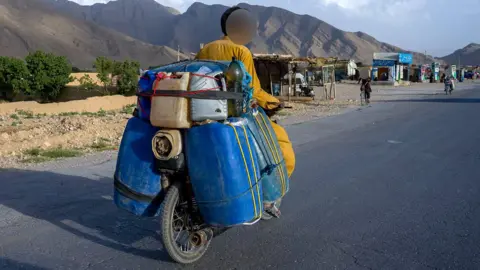
As dawn breaks, hundreds of men gather at a dusty square in Chaghcharan, the capital of Ghor province in Afghanistan. They line the roadside hoping someone will come along offering any work, which will determine whether their families eat that day.
The likelihood of success, however, is low. Juma Khan, 45, has found just three days of work in the past six weeks that paid between 150 to 200 Afghani ($2.35-$3.13; £1.76-£2.34) per day. My children went to bed hungry three nights in a row. My wife was crying, so were my children. So I begged a neighbour for some money to buy flour, he says.
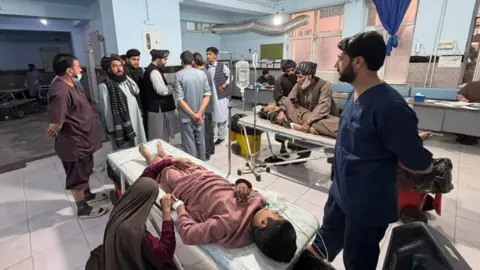
His story reflects a larger crisis. In Afghanistan today, a staggering three in four people cannot meet their basic needs, according to the UN. Unemployment surges, healthcare struggles, and dwindling aid has left millions to fend for themselves.
The men in Ghor province are desperate. Rabani, another laborer, recalls the agonizing moment he learned that his children hadn't eaten for two days. I felt like I should kill myself. But then I thought how will that help my family? So here I am looking for work.
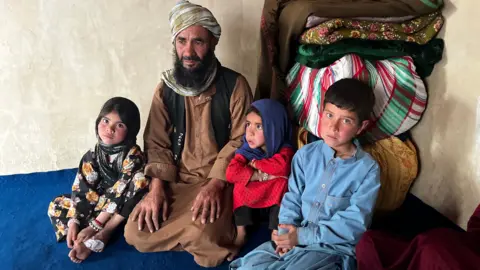
Abdul Rashid Azimi takes us into his home and brings out two of his children – seven-year-old twins Roqia and Rohila. In a heartbreaking admission, he reveals his desperate willingness to sell one of his daughters to feed his other children. I'm poor, in debt and helpless, he cries.
The situation has become so dire that families like Saeed Ahmad's have been forced to sell their children. He sold his five-year-old daughter Shaiqa to cover medical expenses, hoping that the arrangement would allow her to receive the necessary surgery.
The harsh reality is that this grim reality is not the exception but increasingly common across Afghanistan as aid dwindles and economic conditions deteriorate. With such deep-seated poverty and humanitarian crises, the brutal choice between survival and selling a child haunts fathers like Abdul and Saeed daily.