In brief
In a week that has seen France’s youth marching for a future free of unfair costs, the flames that swept through Limoges’ 19th‑century town hall have become a national symbol of conflict. Mayor Guillaume Guérin, still in tears, blames left‑wing rioters and has cited arrests of suspects with links to radical networks. While some residents view the destruction as an extreme overstep, others argue that the building’s loss highlights deep socioeconomic divides. The event has prompted a tightening of police presence, curfews and calls by political leaders to return to debate rather than violence.
Fire‑blasted Limoges Town Hall Becomes Symbol of French Division
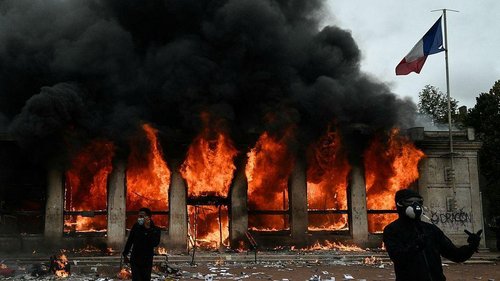
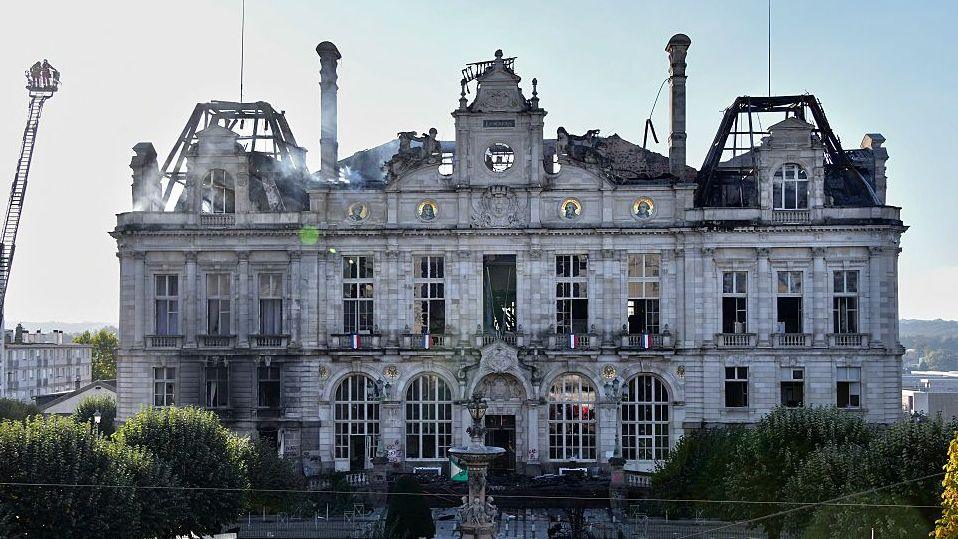
In the southwest of France, the 19‑century town hall of Limoges now sits in ruins, its wooden clock tower collapsed and its façade scarred by flames. The image of the charred façade – taken a week after the unrest – has catapulted the city to the center of a national debate about protest, police power and economic policy.
“It is a historical tragedy for France, not just Limoges.” Mayor Guillaume Guérin, who only just took office six months ago, said in tears when he first saw the damage. He blames left‑wing rioters and has named two men arrested – a 66‑year‑old and a 34‑year‑old – who prosecutors say have links to radical networks.
Local residents have poured flowers and sombre tributes to the hall, whose absence is already felt in the town’s history books. A veteran fishmonger, Jean Roger Faucher, whose wedding took place in the building, remarked that the loss of his cultural landmark has shaken the community: “I got married in the town hall, so it had an unimaginable effect on us.”
The fire and looting did not occur in isolation. France’s summer protests, originally motivated by education policy, have expanded into a “nation‑wide frustration over rising costs of living.” The protest movement has now covered a fiscal crisis that is among the largest in Europe, and the country is already six months from a presidential election that many see as a turning point.
Prime Minister Sébastien Lecornu visited Limoges on Friday, but he has to deal with an environment where the state has blocked demonstrations in several cities and pledged to hire more police officers. In Limoges, overnight curfews have been announced and gatherings have been capped at ten people in the city centre.
The reaction in Limoges is mixed. Some residents, like 19‑year‑old medical student Jade, say the protests are a necessary vent, but they are not furious when they see the building destroyed: “I think burning the town hall is sad, but it’s not the saddest part of the protests,” she explained. Others, such as 24‑year‑old student Alexander, argue that protesters have crossed a line that endangers civic life.
The town hall’s destruction could either deepen France’s political polarization or galvanise the nation toward calmer debate. As the country watches, the blaze has become a potent reminder that beyond policy and money, cultures and symbols matter to citizens who wish to influence the future of France.
Additional reporting by Paul Pradier.