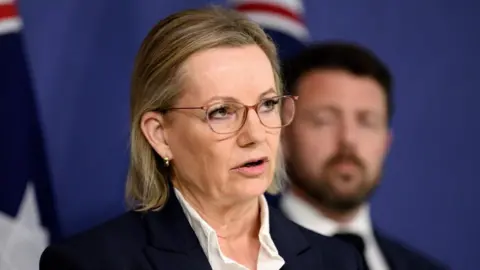
Australia's Liberal-National Coalition, the country's main opposition, reunited on Sunday, more than two weeks after the centre-right partners split in a row over hate speech laws. Liberal Party leader Sussan Ley announced, 'The Coalition is back together and looking to the future, not to the past,' alongside National Party leader David Littleproud in Canberra.
The Coalition divided on January 22 after the Nationals, citing free speech concerns, refused to support reforms proposed by the government following a deadly attack by gunmen at a Jewish festival in Bondi Beach in December, which resulted in 15 fatalities.
Littleproud reflected on the split, stating, 'It's been disappointing; we've got to where we are but it was over a substantive issue.' The Coalition, which suffered a significant defeat in the last election, faced this split just months after previously reconciling differences mainly centered around climate and energy policy.
The latest division stemmed from the Labor government's hate speech reforms, which were introduced as a reaction to the Bondi Beach attack. While the Liberals supported the government's proposed measures, the Nationals abstained in the lower house and voted against the legislation in the Senate, arguing that the reforms were rushed and jeopardized free speech.
The contentious legislation aims to prohibit groups accused of promoting hate and impose stricter penalties on those advocating violence. Ley emphasized the Coalition's obligation to rejuvenate its governance prospects amid a challenging political landscape, noting, 'I acknowledge this has been a difficult time for millions of our Coalition supporters, and many other Australians who rely on our two great parties to provide scrutiny and leadership.'
Ley and Littleproud confirmed that they established a new understanding that no changes could be made to decisions from the Coalition's joint 'shadow cabinet.' The Coalition, which dates back to the 1940s, hadn't experienced a split of this magnitude since 1987, though this incident followed a brief separation just last year.
Interestingly, the National Party typically advocates for regional communities and tends to adopt more conservative positions than their Liberal counterparts. Currently, the Coalition is confronting challenges from populist factions such as Senator Pauline Hanson's One Nation party, which has gained traction in recent polls, exacerbated by the Liberal Party's losses in last year’s federal election.}
The Coalition divided on January 22 after the Nationals, citing free speech concerns, refused to support reforms proposed by the government following a deadly attack by gunmen at a Jewish festival in Bondi Beach in December, which resulted in 15 fatalities.
Littleproud reflected on the split, stating, 'It's been disappointing; we've got to where we are but it was over a substantive issue.' The Coalition, which suffered a significant defeat in the last election, faced this split just months after previously reconciling differences mainly centered around climate and energy policy.
The latest division stemmed from the Labor government's hate speech reforms, which were introduced as a reaction to the Bondi Beach attack. While the Liberals supported the government's proposed measures, the Nationals abstained in the lower house and voted against the legislation in the Senate, arguing that the reforms were rushed and jeopardized free speech.
The contentious legislation aims to prohibit groups accused of promoting hate and impose stricter penalties on those advocating violence. Ley emphasized the Coalition's obligation to rejuvenate its governance prospects amid a challenging political landscape, noting, 'I acknowledge this has been a difficult time for millions of our Coalition supporters, and many other Australians who rely on our two great parties to provide scrutiny and leadership.'
Ley and Littleproud confirmed that they established a new understanding that no changes could be made to decisions from the Coalition's joint 'shadow cabinet.' The Coalition, which dates back to the 1940s, hadn't experienced a split of this magnitude since 1987, though this incident followed a brief separation just last year.
Interestingly, the National Party typically advocates for regional communities and tends to adopt more conservative positions than their Liberal counterparts. Currently, the Coalition is confronting challenges from populist factions such as Senator Pauline Hanson's One Nation party, which has gained traction in recent polls, exacerbated by the Liberal Party's losses in last year’s federal election.}