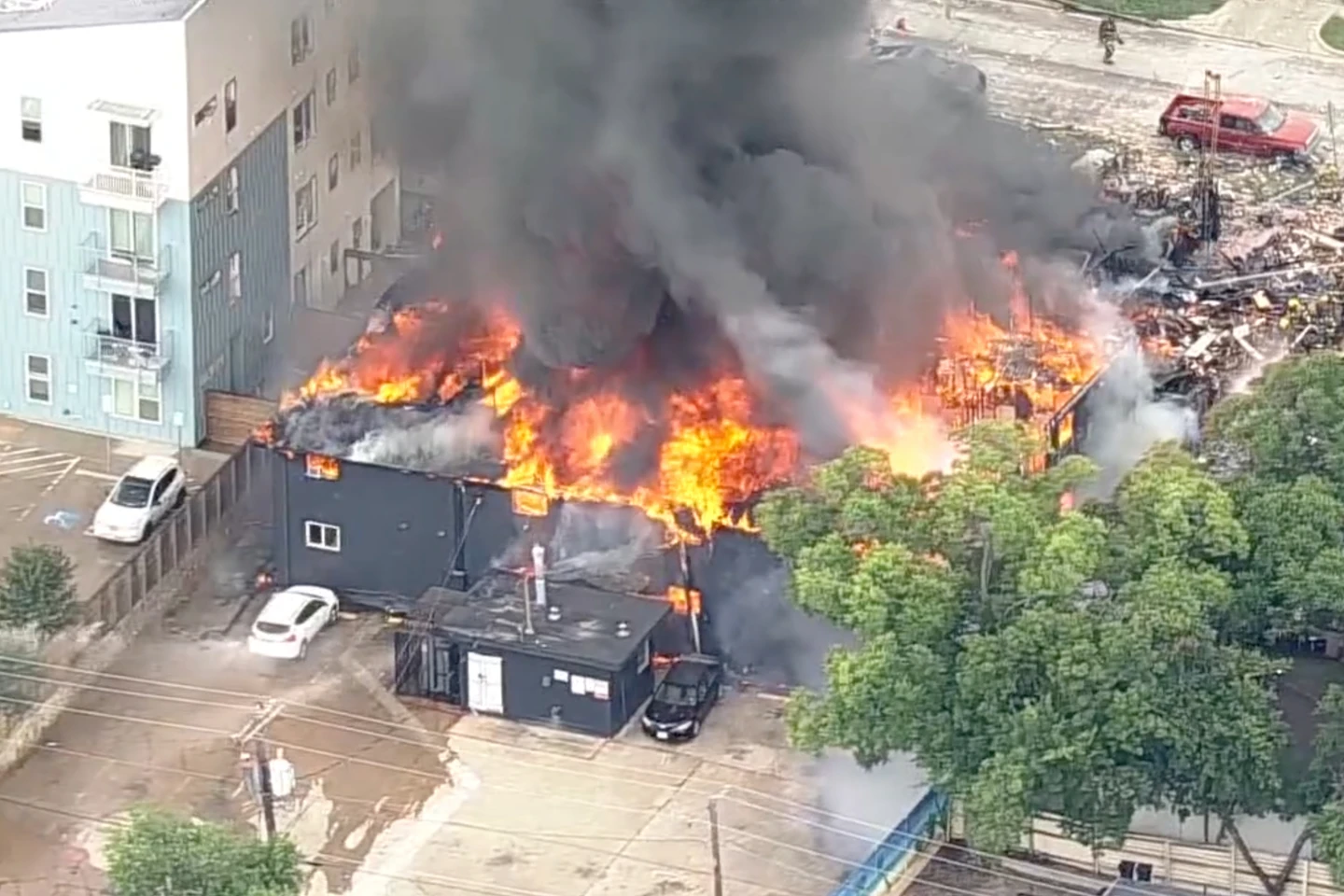
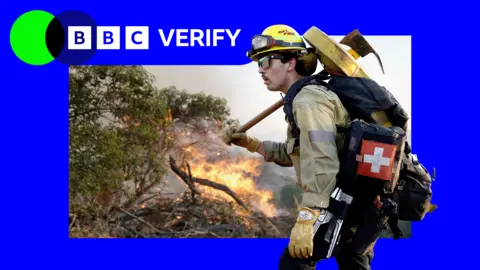
One person has died and 300 properties have been destroyed in bushfires that have torn across south-east Australia.
The fires have raged in dozens of locations across the country for several days, mostly in the state of Victoria, but also in New South Wales, burning through land almost twice the size of Greater London.
A state of emergency has been declared in Victoria as thousands of firefighters and more than 70 aircraft battle the blaze. Residents in more than a dozen communities have been advised to evacuate their homes.
Authorities fear the fires, which are being fueled by very hot, dry, and windy conditions, could continue burning for several weeks.
Victoria's Premier Jacinta Allan reported that 30 active fires are currently burning across the state, with 10 especially critical. She noted that as much as 350,000 hectares have been scorched as of early Sunday, January 11, prompting concerns over the severity of the situation.
The single confirmed fatality was discovered in the village of Gobur, near Longwood, around 110 kilometers north of Melbourne. Police have yet to release the identity of the victim.
Allan commended the emergency workers for their efforts, acknowledging the toll of these distressing circumstances on the Gobur community.
In the town of Harcourt, firefighter Tyrone Rice experienced personal loss as his home was consumed by the flames while he was combatting the fires. He articulated the emotional pain of losing his home amidst the disaster.
The situation is exacerbated by deteriorating air quality across the region, which echoes the catastrophic fires that affected south-east Australia in the 2019-2020 season, leading to significant loss of life and property.
While it is complex to directly attribute individual wildfires to climate change, scientists observe that climate change is intensifying conditions that foster bushfires.