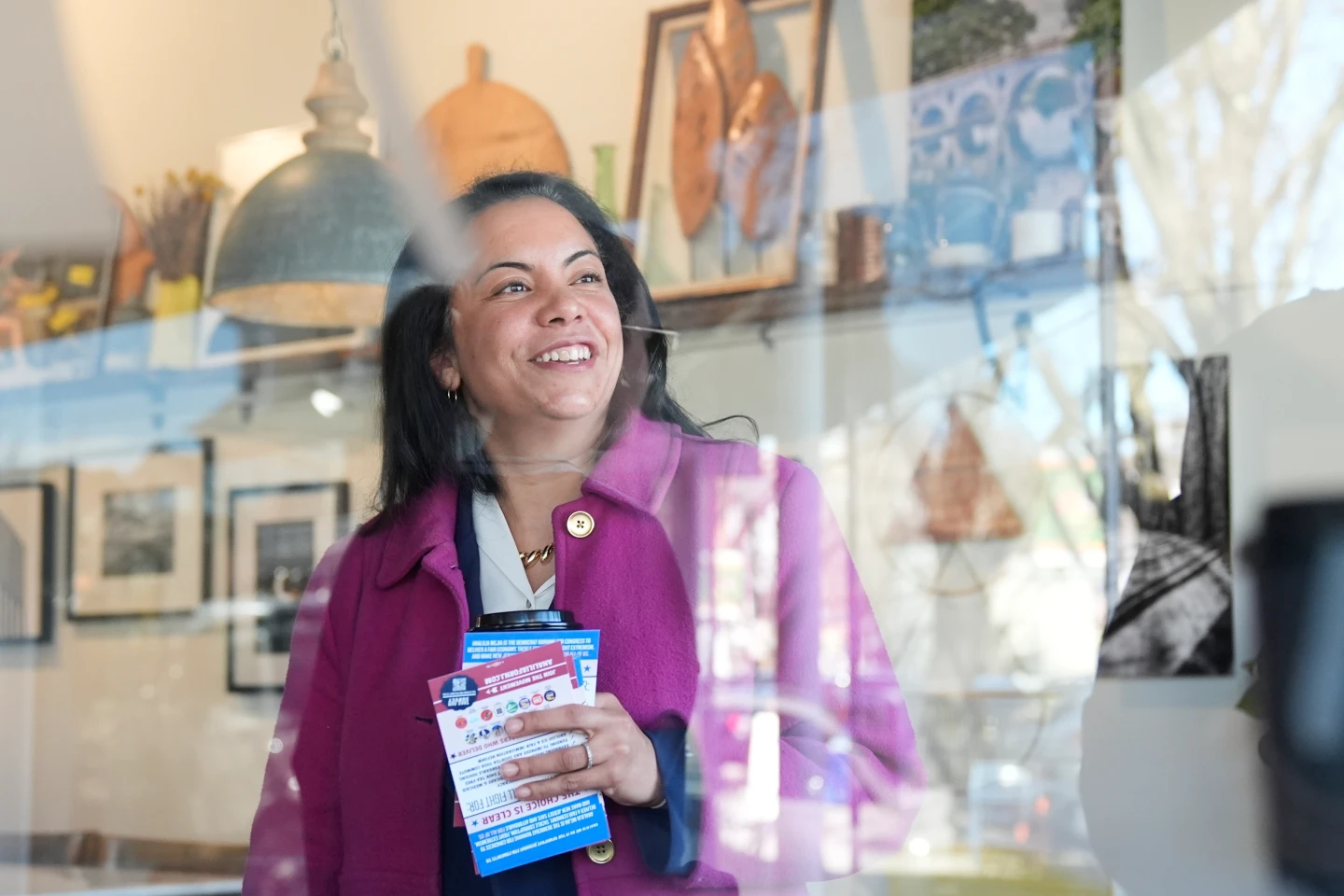
DENVILLE, N.J. (OnPoint News) — In a significant victory for Democrats in New Jersey, Analilia Mejia won a special election for the U.S. House on Thursday, defeating Republican Joe Hathaway. Mejia's campaign focused on opposing former President Donald Trump and his policies, appealing to a shifting electorate in the traditionally Republican 11th District.
The election results keep the seat held by Mikie Sherrill, who is now governor, in Democratic hands as the midterm elections approach. Mejia, a former head of the Working Families Alliance, was publicly supported by notable figures including Vermont U.S. Senator Bernie Sanders.
Mejia's victory, quickly called by the Associated Press after polls closed, showcases a growing trend of Democratic successes in areas that have recently leaned more toward the party, reflecting voter sentiment against Trump’s leadership. Mejia emphasized that Congress needs strong voices willing to take action rather than merely draft resolutions. “The people here are ready to do something about it,” she declared.
While Hathaway attempted to frame Mejia’s progressive platform as too radical, she maintained a strong base of support, focusing on issues such as immigration reform and economic justice. During the primary in February, Mejia stood out in a crowded field, positioning herself as a candidate for change, advocating for bold policies.
The 11th District, covering parts of Essex, Morris, and Passaic counties, has seen demographic shifts that have leaned Democratic in recent years. Sherrill’s earlier victories in 2018 and 2024 further solidified this trend. Voters like Saran Cunningham, who initially expressed hesitation about Mejia's leftist stance, shifted their support as they sought representatives who would advocate for the welfare of all citizens.
As the political climate prepares for the upcoming general election in November, Mejia and Hathaway may face off again for a full two-year term. This special election could signal larger trends across suburban areas, indicating a significant transformation in voter priorities and party representation.