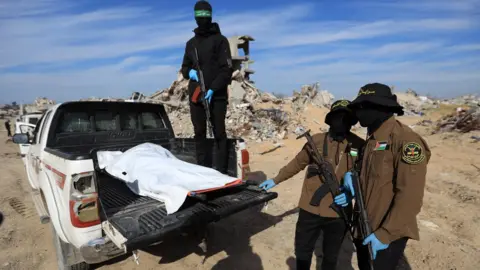
As Gazans begin their return home after being uprooted for 15 months, they face an overwhelming challenge: rebuilding from the ground up in a region devastated by war. The Gaza Strip, though small in size, has become a landscape of uncertainty and immense humanitarian need, affecting countless lives.
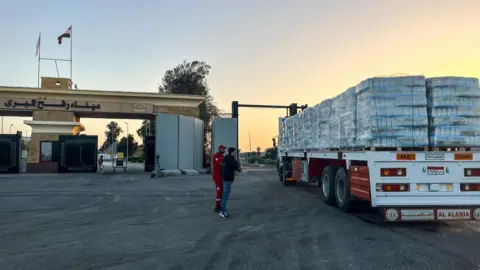
Journalist Ghada el-Kurd, who recently returned to the area from her shelter in Deir el-Balah, captures the bleak situation: “There are no facilities, no services, no electricity, no water, no infrastructure. We have to re-establish again from the beginning, from zero.” While initial aid efforts are underway, the scale of what is required to sustain life in Gaza is daunting. UN representative Sam Rose noted significant flows of assistance but emphasized that the essentials are insufficient, stating, “This is a long, long road.”
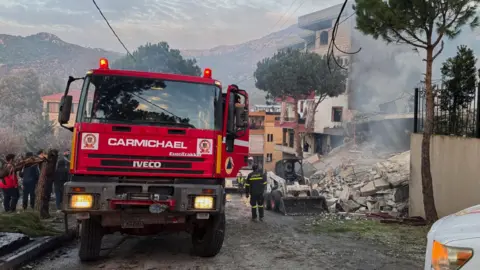
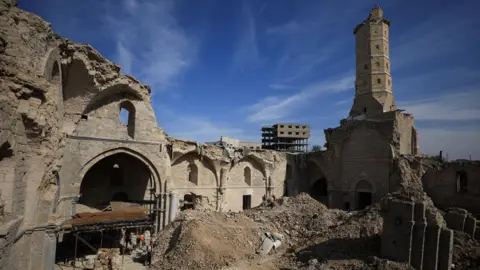
A staggering 700,000 people fled northern Gaza amidst the warfare, with many areas experiencing complete destruction. The United Nations reported that up to 70% of Gaza's buildings sustained damage or were destroyed since the outbreak of hostilities in October 2023. High levels of devastation are concentrated in the north, particularly in Jabaliya, where half of the inhabitants once lived in one of the largest refugee camps, now decimated.
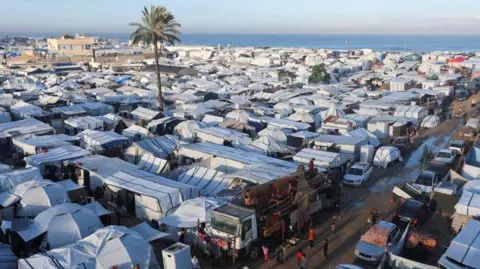
The urgent need for shelter has led Gaza's Hamas-run Government Media Office to call for 135,000 tents and caravans. While aid is trickling in, the UN is struggling to meet the expanding demands. “There simply aren’t that many manufactured tents for aid operations anywhere in the world,” Mr. Rose remarked.
As the displaced seek refuge, tensions are rising due to crowding and competing needs. Asmaa Tayeh, whose family had to abandon their home in Jabaliya but remained in the north, noted growing stress as people begin returning to their erstwhile homes. “There’s a huge problem because people used to stay in houses of relatives or friends who are in the south. Now they have to empty these houses and give them back to their owners,” she relayed.
The return also means rising prices and increased pressure on already scarce resources, such as water and electricity. Yet, some returnees express hopeful sentiments, viewing their homecoming as a step toward recovery. As one returning resident conveyed, “We are overjoyed to return to the north, where we can finally find comfort,” contrasting their past sufferings in the south.
In the midst of these challenges, discourse around regional solutions continues. U.S. former President Donald Trump suggested temporarily relocating Palestinians to neighboring Egypt or Jordan, a notion that was quickly denounced by officials in both countries due to potential security ramifications. Advocates for Palestinian rights argue that, instead, Gazans deserve the opportunity to rebuild their own nation.
As the situation unfolds, journalist Ghada el-Kurd indicated that unless significant restoration efforts are made swiftly, many might pursue better prospects beyond Gaza's borders. “It is vital to provide a glimpse of hope; otherwise, people will leave seeking improved futures elsewhere,” she warned, reflecting the need for urgent action and support to ensure that the essence of Gaza remains with its people.