Bali, Indonesia's famed tropical paradise, has charmed plenty of tourists over the years. But it's also leaving a growing number disillusioned - recently among them Zoe Rae.
Since landing in Bali, something for us has just not felt quite right, she said in a YouTube video in July, filmed in her hotel room. We came to Bali with high expectations because we'd seen on social media everyone having such a lovely time.
She added: If you took a picture of the coffee shop and zoomed out, you would see what the reality was.
Ms Rae did not describe the reality she saw - nor reply to the BBC's questions. But it was unsettling enough to make her book an impromptu flight to Dubai to continue celebrating her wedding anniversary there instead.
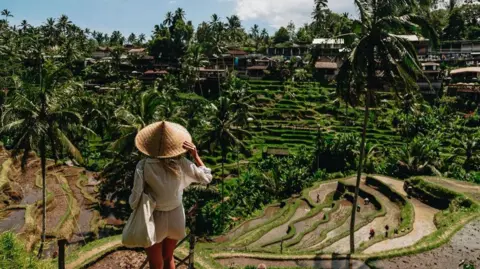
One does not need to look far for clues. Social media posts about expectations vs reality in Bali abound. Diners enjoying the sunset at a beach-side restaurant - and the piles of rubbish along the rickety stairs to get there. The bikini-clad pose in front of a waterfall, while a snaking line of tourists await their turn on slippery rocks. The alfresco smoothies with bamboo straws, right beside soot-puffing motorcycles stuck on jammed roads.
Millions flock to Bali every year in search of the spiritual Shangri-La promised in the noughties memoir and film Eat, Pray, Love. What they're greeted by instead are crowds, traffic and the cacophony of construction, which has ramped up alongside a post-pandemic boom in tourism.
The growing strain on the island had produced plenty of eye-rolls and grumbles, but this month events took a sombre turn. More than a dozen people died in rare floods on the island. Poor waste management and unchecked urban development had worsened the situation, officials said.
The local government has since announced it will restrict new construction. But many see such interventions as too little, too late.
How did Bali, celebrated for decades as the last paradise, get to this point? Western adventurers have been turning up in Bali since the early 20th Century, when it was seen as an exotic backwater, home to Hindu temples and rice fields. Spirituality and a reverence for nature run deep: monkeys, cows and birds carry sacred import, large ancient trees are thought to house spirits, and the popular trekking volcano Mount Batur is believed to be protected by a goddess.
Over the past decade, tourism to the island has skyrocketed, from 3.8 million visitors in 2014 to 6.3 million last year. This year looks set to be a record-breaker: the island appears on track to welcome more than seven million foreign tourists. Rather than unique traditions or idyll, Bali today is better known for its beach clubs and surf houses. Alcohol is easily available and scanty clothing is more acceptable compared to the rest of Indonesia. And most visitors also want to immerse themselves in Bali's luxe hotels, villas and spas.
Zoe Rae's disillusionment with the reality she encountered in Bali exposes the idealised image held by many casual travellers. Responding to Mr Rae's post, Hollie Marie, a British content creator living in Bali, warned in a TikTok video that only looking up Bali on Instagram will give you a distorted reality of the island itself.
Despite the uncontrolled growth of tourism, some believe the development of Bali and the harmony of nature can still be maintained. Indeed, businesses and activists have launched ground-up efforts to encourage sustainable development, from waste management education to beach clean-ups.
Authorities, who have been criticised for not regulating tourism enough, are also trying to clean up the island. Earlier this year, Bali banned single-use plastics and issued behavior guidelines for visitors to ensure that Bali's tourism remains respectful, sustainable, and in harmony with our local values. Police have been deployed to popular areas to make sure visitors follow rules.
Since landing in Bali, something for us has just not felt quite right, she said in a YouTube video in July, filmed in her hotel room. We came to Bali with high expectations because we'd seen on social media everyone having such a lovely time.
She added: If you took a picture of the coffee shop and zoomed out, you would see what the reality was.
Ms Rae did not describe the reality she saw - nor reply to the BBC's questions. But it was unsettling enough to make her book an impromptu flight to Dubai to continue celebrating her wedding anniversary there instead.
One does not need to look far for clues. Social media posts about expectations vs reality in Bali abound. Diners enjoying the sunset at a beach-side restaurant - and the piles of rubbish along the rickety stairs to get there. The bikini-clad pose in front of a waterfall, while a snaking line of tourists await their turn on slippery rocks. The alfresco smoothies with bamboo straws, right beside soot-puffing motorcycles stuck on jammed roads.
Millions flock to Bali every year in search of the spiritual Shangri-La promised in the noughties memoir and film Eat, Pray, Love. What they're greeted by instead are crowds, traffic and the cacophony of construction, which has ramped up alongside a post-pandemic boom in tourism.
The growing strain on the island had produced plenty of eye-rolls and grumbles, but this month events took a sombre turn. More than a dozen people died in rare floods on the island. Poor waste management and unchecked urban development had worsened the situation, officials said.
The local government has since announced it will restrict new construction. But many see such interventions as too little, too late.
How did Bali, celebrated for decades as the last paradise, get to this point? Western adventurers have been turning up in Bali since the early 20th Century, when it was seen as an exotic backwater, home to Hindu temples and rice fields. Spirituality and a reverence for nature run deep: monkeys, cows and birds carry sacred import, large ancient trees are thought to house spirits, and the popular trekking volcano Mount Batur is believed to be protected by a goddess.
Over the past decade, tourism to the island has skyrocketed, from 3.8 million visitors in 2014 to 6.3 million last year. This year looks set to be a record-breaker: the island appears on track to welcome more than seven million foreign tourists. Rather than unique traditions or idyll, Bali today is better known for its beach clubs and surf houses. Alcohol is easily available and scanty clothing is more acceptable compared to the rest of Indonesia. And most visitors also want to immerse themselves in Bali's luxe hotels, villas and spas.
Zoe Rae's disillusionment with the reality she encountered in Bali exposes the idealised image held by many casual travellers. Responding to Mr Rae's post, Hollie Marie, a British content creator living in Bali, warned in a TikTok video that only looking up Bali on Instagram will give you a distorted reality of the island itself.
Despite the uncontrolled growth of tourism, some believe the development of Bali and the harmony of nature can still be maintained. Indeed, businesses and activists have launched ground-up efforts to encourage sustainable development, from waste management education to beach clean-ups.
Authorities, who have been criticised for not regulating tourism enough, are also trying to clean up the island. Earlier this year, Bali banned single-use plastics and issued behavior guidelines for visitors to ensure that Bali's tourism remains respectful, sustainable, and in harmony with our local values. Police have been deployed to popular areas to make sure visitors follow rules.