The death toll in the floods which struck Indonesia last week has now climbed to 631 on Tuesday, with rescue workers still battling to reach affected areas.
The floods, which were caused by a rare cyclone that had formed over the Malacca Strait, have hit three provinces and impacted some 1.5 million people, according to the government's disaster agency.
Nearly 500 people remain missing, while thousands more have been injured.
Indonesia is just one part of Asia which has been hit with torrential rain and storms in recent days, with Thailand, Malaysia, and Sri Lanka all also reporting deaths.
In Indonesia, the provinces of Aceh, North Sumatra and West Sumatra have been hardest hit, with thousands still cut off and without critical supplies.
About one million people have been evacuated, the National Disaster Mitigation Agency said.
Arini Amalia, a resident from Aceh's Pidie Jaya Regency, told the BBC the flood waters had been like a tsunami.
According to my grandmother, this is the worst, the worst in her life, Amalia said.
Aid workers have been trying to reach people on foot and by motorcycle, as many roads are impassable to larger vehicles.
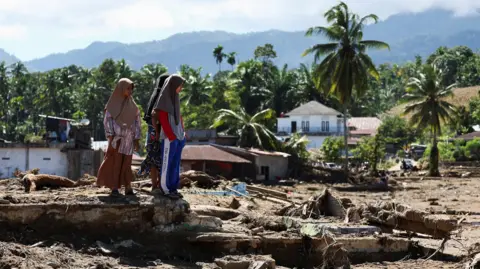
Pictures from the region show bridges washed away, roads covered in mud and debris, and logs piled high.
At West Sumatra's Twin Bridges landmark, Mariana watched as excavators cleared the roads, hoping they would find her missing family members including her 15-year-old son.
Many are still waiting for food aid, with some saying they have not eaten for two to three days.
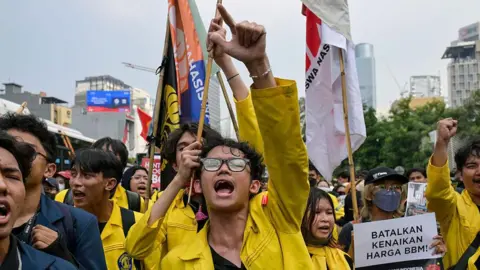
As rescue efforts continue, anger has started to grow towards the government's disaster response. Critics say that authorities were ill-prepared for the floods, with some blaming bureaucratic red tape for slowing down the distribution of food aid.
On Monday, President Prabowo Subianto acknowledged some roads were still cut off, but added we're doing everything we can to overcome difficulties.
Across South and South East Asia, about 1,200 people have been killed in the last week in flooding and landslides. The combination of weather events, including the northeast monsoon and an unusually intense cyclone, has contributed to the severity of the flooding, exacerbated by environmental mismanagement.