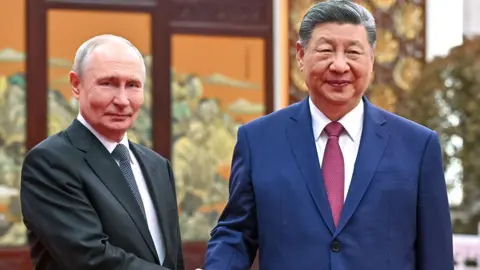
In a significant escalation of economic measures, the Biden administration has launched some of its toughest sanctions against Russia, focusing on crippling the nation's energy revenue that is crucial for its military efforts in Ukraine. This latest round of sanctions targets over 200 entities and individuals, including prominent traders, government officials, and insurance companies, as well as hundreds of oil tankers.
For the first time since the onset of the all-out invasion of Ukraine, the United Kingdom is aligning with the United States to directly sanction key energy corporations, Gazprom Neft and Surgutneftegas. UK Foreign Secretary David Lammy emphasized the importance of these actions, stating, “Taking on Russian oil companies will drain Russia's war chest – and every ruble we take from Putin's hands helps save Ukrainian lives.”
The newly introduced measures by the US Treasury, announced on Friday, will enter legal provisions, compelling any future Trump administration to involve Congress to repeal them. Washington is also aiming to tighten constraints on legal purchases of Russian energy and to tackle what it describes as Moscow's "shadow fleet"—the vessels involved in transporting oil globally.
US Treasury Secretary Janet Yellen noted that these sanctions represent a significant increase in risks associated with Russian oil trade, particularly in shipping and financial support. President Joe Biden remarked on the precarious situation facing Russian President Vladimir Putin, asserting, “It's really important that he not have any breathing room to continue to do the god-awful things he continues to do.”
While Biden acknowledged that the sanctions might lead to a slight rise in gas prices in the US, estimating an increase of about three to four cents per gallon, he underlined the potential long-term benefits these measures could have on the Russian economy. Ukrainian President Volodymyr Zelensky expressed gratitude for the bipartisan support from the US.
Efforts to implement a price cap on Russian oil have been part of the broader strategy to limit the country’s energy exports but faced challenges due to worries about global oil supply and market stability. However, experts believe the current oil market is resilient enough to absorb these changes. According to Daniel Fried, a distinguished fellow at the Atlantic Council, “US oil production (and exports) are at record levels and rising, and therefore the price impact of taking Russian oil off the market will be attenuated."
Moreover, John Herbst, a former US ambassador to Ukraine, lauded the sanctions as impactful but stressed that their success hinges on effective implementation. He reiterated the importance of the incoming administration's role in determining the fallout on the Russian economy. As the world watches closely, the stakes in this economic battle are undoubtedly high, with repercussions extending far beyond just the energy sector.