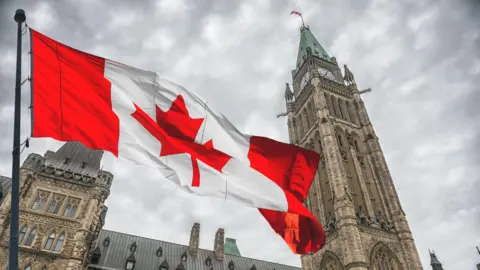
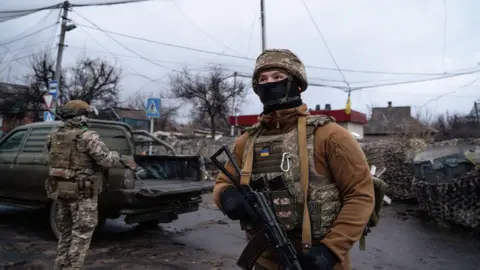
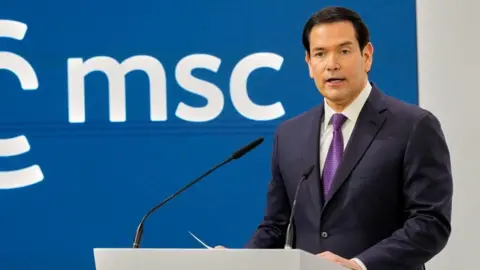
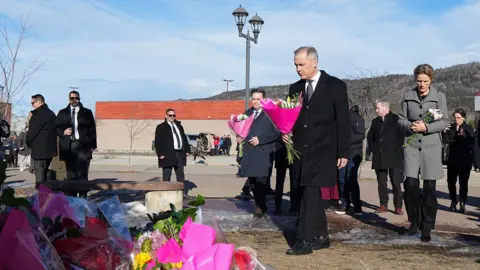
In a significant diplomatic assembly in La Malbaie, Quebec, foreign ministers from the G7 nations—Canada, the United States, Britain, France, Germany, Italy, Japan, and the European Union—aimed to resolve burgeoning diplomatic tensions fueled by the Trump administration's contentious tariff policies and its less-than-supportive stance on Ukraine. Despite these challenges, the diplomats displayed a degree of cohesion, especially regarding the ongoing crisis in Ukraine.
At the meeting’s conclusion, a joint statement acknowledged unwavering support for Ukrainian sovereignty while also recognizing the political aspirations of both Israelis and Palestinians. However, the absence of any explicit endorsement for a two-state solution was notably conspicuous, echoing the complexities surrounding these geopolitical issues during Trump's leadership.
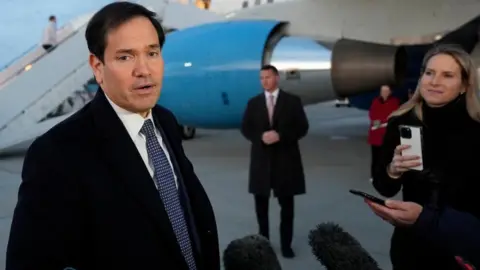
The significance of achieving some consensus on Ukraine was amplified by the backdrop of Trump's previous criticisms of Kyiv. Secretary of State Marco Rubio found himself in a delicate position, particularly in discussions with Canadian Foreign Minister Mélanie Joly, who expressed her country's discontent towards Trump's remarks about possibly annexing Canada. Her direct response, affirming that “Canada’s sovereignty is not up to debate, period,” underlined the tensions that mere tariff discussions had escalated into a broader dialogue about national integrity and international respect.
Overall, the G7 meeting marks a cautious yet necessary compromise among leading industrialized democracies amid an increasingly uncertain global landscape. The negotiations not only underscore the significance of diplomacy in times of strain but also reflect ongoing efforts to maintain alliances in the face of ideological divides.
At the meeting’s conclusion, a joint statement acknowledged unwavering support for Ukrainian sovereignty while also recognizing the political aspirations of both Israelis and Palestinians. However, the absence of any explicit endorsement for a two-state solution was notably conspicuous, echoing the complexities surrounding these geopolitical issues during Trump's leadership.
The significance of achieving some consensus on Ukraine was amplified by the backdrop of Trump's previous criticisms of Kyiv. Secretary of State Marco Rubio found himself in a delicate position, particularly in discussions with Canadian Foreign Minister Mélanie Joly, who expressed her country's discontent towards Trump's remarks about possibly annexing Canada. Her direct response, affirming that “Canada’s sovereignty is not up to debate, period,” underlined the tensions that mere tariff discussions had escalated into a broader dialogue about national integrity and international respect.
Overall, the G7 meeting marks a cautious yet necessary compromise among leading industrialized democracies amid an increasingly uncertain global landscape. The negotiations not only underscore the significance of diplomacy in times of strain but also reflect ongoing efforts to maintain alliances in the face of ideological divides.