In brief
At Umm Al Qaiwain University, students organized a discussion with cybersecurity, policing, AI and media specialists to address misinformation in crisis situations. The dialogue highlighted the rapid spread of false content and the importance of verification culture while showcasing AI’s potential under human oversight. Experts debated the challenges, responsibilities and emerging risks associated with smart technologies.
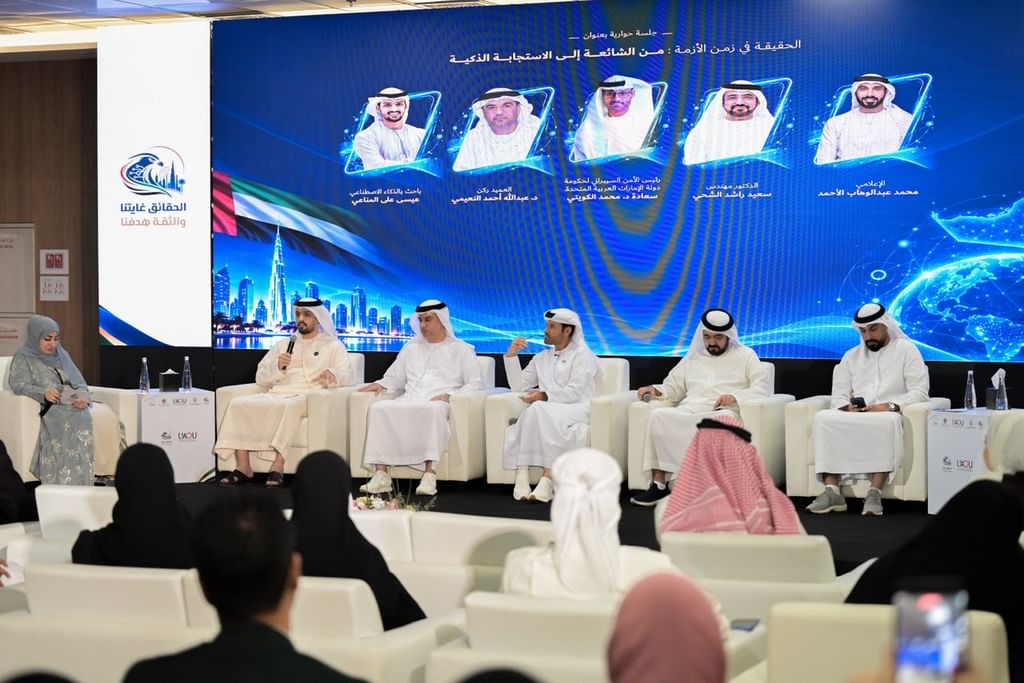
On Saturday, November 7, 2026, students from the College of Mass Communication at Umm Al Qaiwain University opened a dialogue session that gathered senior officials in cybersecurity, policing, artificial intelligence and media to talk about how smart technologies can help identify and counter misinformation in crisis situations.
The event was part of the students’ graduation project titled “Truth in Times of Crisis: From Rumor to Smart Response”, and was hosted by TRENDS Research & Advisory – a unit within the larger TRENDS Group. Representatives from the university and the advisory group welcomed a panel that famously included Mohamed Hamad Al Kuwaiti, the head of cybersecurity for the UAE government; Brigadier‑General Abdullah bin Salman Al Nuaimi, the deputy director of the Operations Department at Ras Al Khaimah Police General Command; Saeed Rashid Al Shehhi, typically involved in media regulation; Mohammed Al Ahmad, a media professional; and Isa Al Manaei, a researcher at TRENDS who specialises in AI.
During the session, Al Manaei explained how intelligent systems have evolved beyond simple question‑answering to the point where they can search numerous sources, generate text, imagery and video, and perform complex tasks autonomously. He noted that these capabilities “provide significant opportunities to accelerate work, improve analytical efficiency and support decision‑makers, journalists and researchers.” At the same time, they raise new information‑related challenges by making realistic digital content easier and cheaper to produce.
Al Manaei added that the danger of misleading content comes not only from the ease of creating it but also from the speed with which it can spread through social media. He emphasized that misinformation can hit large audiences within minutes, often before authorities or media outlets have the chance to verify or correct it. He observed that crises tend to intensify this problem: “Demand for information increases while the time people spend verifying content may decline.”
The panel agreed that universities and research groups need to foster a verification culture among audiences and media professionals alike. The session underlined the role of institutions in protecting the information environment and strengthening trust in reliable sources.
Beyond the technical aspects, the discussion raised several open questions that will shape future policy and strategy. First, how can AI systems be designed to detect misinformation in real time while preserving user privacy and avoiding bias? Second, what standards and oversight mechanisms are required to keep the rapid functioning of these systems accountable? Third, how can policing bodies and media outlets coordinate without stifling free speech or speeding the spread of rumours? Fourth, to what extent should educational programmes be adapted to train the next generation of journalists, policymakers and technologists in these emerging tools and their ethical constraints?
It was clear from the conversation that smart technologies offer rapid response capabilities but are still limited by human oversight. The participants stressed the need for a multi‑layered approach that combines automated detection with expert verification, community engagement and institutional responsibility. As TRENDS’ research indicates, the line between innovative information tools and the risk of misinformation is thin, but with careful regulation and a culture of critical consumption it is possible to tip the balance toward truth.
Implications for the UAE and Beyond
The dialogue reflects a broader regional concern about the integrity of information during emergencies. The UAE government has already invested in national cybersecurity frameworks, and this university‑led initiative demonstrates how academic research can inform practical applications. By blending AI, policy and media ethics, the participants offered a prototype for how to harness technology responsibly. The lessons may also interest other nations grappling with misinformation, especially as smart systems become increasingly sophisticated.
In sum, the Umm Al Qaiwain University students’ event was a real‑time case study in the potential and pitfalls of using smart technology to counter misinformation. It showcased the speed, power and complexity of modern AI systems and, at the same time, highlighted the urgent need for verification culture and oversight in crisis communication.