
In brief
At a two‑day G20 foreign ministers’ gathering in Atlanta, Turkish Foreign Minister Hakan Fidan hailed Ankara’s constructive role, citing proposals on energy security and supply‑chain bottlenecks. He called for continued dialogue with Russia and Ukraine to address Black Sea disruptions and stressed Turkey’s desire to distinguish itself through meaningful mediation rather than merely echoing other nations’ positions. The meeting, hosted by U.S. Secretary of State Marco Rubio, was a prelude to the December leaders’ summit in Miami.
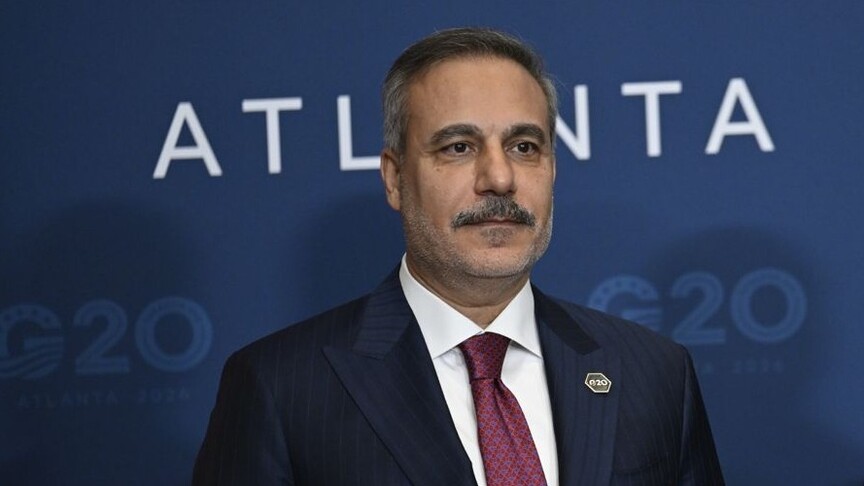
Turkish Foreign Minister Hakan Fidan said on Saturday that Ankara had stepped up as a problem‑solver during a G20 foreign ministers’ meeting in Atlanta, where ministers from 19 countries convened to address global crises such as energy shortages and supply‑chain bottlenecks. Fidan made the remarks to Anadolu Agency and the state broadcaster during a press window on the sidelines of the two‑day gathering, noting that the meeting was timed with a surge in worldwide disruption and that constructive proposals were deemed vital for collective progress.
Fidan described the three‑day forum, which was hosted by U.S. Secretary of State Marco Rubio, as “particularly timely” given the growing list of challenges confronting the international community. He pointed to negotiations that focused on “global crises, energy security, and supply‑chain disruptions” and remarked that the energy shortfalls and congestion in key maritime arteries such as the Black Sea, the Gulf, and the Red Sea were taking a steep toll on trade. “Global supply chains have been severely disrupted, and discussions have taken place over how we might remedy or resolve these issues, and what the international community should do in this regard,” Fidan said.
Turkey’s proposal to curb bottlenecks in strategically vital waterways was highlighted as a practical strand of the meeting’s output. Fidan warned that any lack of cooperation over the Black Sea could have dire consequences for regional security and global commerce. While acknowledging the difficulty of navigating conversations on Russia, Ukraine, and the broader Black Sea picture, he stressed that “such discussions are necessary to allow countries to clearly communicate their positions and explore potential solutions.”
Building on Ankara’s longstanding diplomatic tradition of mediating in regional conflicts, Fidan emphasized that Turkey’s role was not merely one of positioning but also of being a conduit for “meaningful contributions.” According to him, “Turkey certainly attaches importance not only to our role as a mediator but also—and more importantly—to taking a stance that is distinct from that of other countries: one that is more constructive and problem‑solving.” The minister’s remarks framed Turkey as a pragmatic actor, ready to bridge gaps where other states might be hesitant to do so.
The meeting’s agenda also underscored energy security. In the wake of global fuel shortages exacerbated by war and pandemic‑related disruptions, the G20 ministerial council examined ways in which renewables, diversification of supply routes, and improved infrastructure could reduce dependence on any single source. Turkey’s position on energy interdependence, tying together the urgency of decarbonisation with the needs of developing economies, was said to be part of the framing that resonated with many.
Supply‑chain resilience was another focal point. While many G20 members pointed to heavy reliance on a single country for key components, Fidan used the meeting to call for a multi‑lag approach that would balance trade interests with risk mitigation. The Turkish minister also highlighted the need for transparency and trust between partners and insisted on open channels of communication amid ongoing tensions with Russia over both strategic and trade matters.
Although the G20 summit will convene a month later in Miami, the Atlanta meeting was framed as a fundamental preparation. By shaping policy discussions and generating actionable proposals in advance of the leaders’ summit, officials hoped to set a constructive tone for the higher‑level negotiations. The bilateral engagement that took place—with Fidan and his counterparts—was a part of a broader effort that involved diplomatic outreach, coordinated statements, and joint initiatives on energy cooperation.
While there are no direct statements that contest Fidan’s assessment of Turkey’s role, some analysts debate the real influence a foreign minister has in persuading other leaders to adopt the proposed solutions. Others note that Turkey’s strategic geography, having borders with both Russia and Europe while controlling a key portion of Maritime Silk Routes, provides it with a unique platform to mediate. Consequently, the emphasis on “problem‑solving” signals Ankara’s intent to sway others beyond mere rhetoric.
Overall, the meeting delivered a clear message that the G20 continues to view itself as a forum for resolving complex, multilateral challenges while Turkey’s foreign minister hopes that Ankara’s proactive stance will lead to measurable progress on supply‑chain and energy security issues before the December summit in Miami.
