In brief
In a speech to Anadolu and TRT on the sidelines of a G20 foreign ministers’ meeting in Atlanta, Turkish Foreign Minister Hakan Fidan warned that the nearly five‑year war between Russia and Ukraine has inflicted massive economic damage globally, and called for Russia and Ukraine to make ‘significant sacrifices’ to achieve a lasting peace. He highlighted the impact of the Strait of Hormuz closure, disrupted Black Sea grain trade, and stressed the need for better ties between Russia and Europe. The call is part of Turkey’s diplomatic push to broker a comprehensive settlement to the conflict.
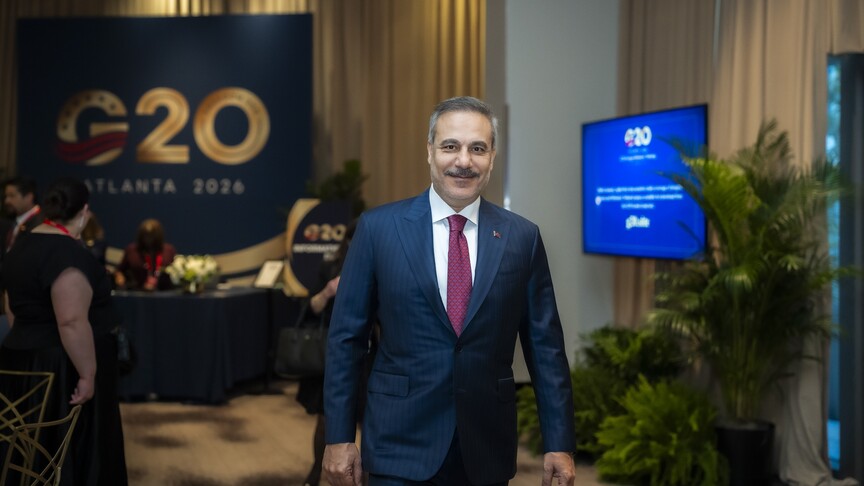
On Saturday, Turkish Foreign Minister Hakan Fidan addressed reporters for Anadolu Agency and Turkish public broadcaster TRT on the sidelines of a G20 foreign ministers’ meeting in Atlanta, urging Russia and Ukraine to make “significant sacrifices” to secure a peace agreement and warning that the war’s damage to the global economy could spark a wider regional conflict.
The nearly five‑year war has already imposed a staggering financial cost worldwide. Fidan said the conflict’s escalating economic and social burdens have become “increasingly difficult to ignore,” especially for European countries that have depended on inexpensive Russian energy to sustain industry and exports. He warned that these unpaid costs threaten to destabilise the international financial system and that any peace proposal must therefore address not only the two belligerents but also the relationship between Russia and the rest of Europe.
Central to Fidan’s message was the closure of the Strait of Hormuz, a critical chokepoint for global oil supplies that the war has effectively derailed. He explained that the combined disruption of energy flows and global trade has “made it increasingly difficult” to calculate the full financial impact of the conflict. The Turkish minister highlighted how European industries, which had benefited from cheap Russian energy, are now facing soaring costs and a shift towards alternate supply chains, further amplifying the economic strain.
Another key concern cited by Fidan was the interruption of commercial shipping in the Black Sea. He noted that Russian and Ukrainian grain and energy supplies struggle to reach international markets, calling the resulting food security crisis “an incredibly problematic issue” that “needs to be brought to a halt as soon as possible.” He added that Turkey is intensifying diplomatic contacts to restore the grain trade and is taking “substantial efforts” to facilitate a return to normal shipping patterns.
“These wars are no longer sustainable. Therefore, Russia and Ukraine must reach an agreement that entails significant sacrifices,”
said the minister. The warning laid out a direct appeal for change that extends beyond the walls of battlefield trenches and into the corridors of global commerce.
Fidan also emphasised the importance of redefining the relationship between Russia and Europe after any potential settlement. “A constructive relationship between Europe and Russia needs to be redefined in the aftermath of peace,” he said, stressing that “any peace agreement that Ukraine reaches with Russia will not be limited to those two countries alone. In a sense, Europe also needs to reconcile with Russia and restart certain aspects of their relationship.”
Amid these statements, the Turkish foreign minister met with U.S. Secretary of State Marco Rubio at the same G20 summit. While details remain sparse, their conversation is understood to revolve around Turkey’s ongoing diplomatic outreach and its proposals to mitigate the global fallout of the war. The meeting underscores Turkey’s active role in facilitating dialogue between the North‑American power and the European‑rushed-for‑peace mission within the same international forum.
Turkish officials have previously indicated that Ankara is pushing practical proposals to address the broader crises triggered by the conflict. According to TRT World, the Turkish minister presented a set of measures aimed at restoring international cooperation and stabilising economic flows. These measures reportedly include a plan to reopen the Black Sea corridor, a framework for energy trade between Russia, Ukraine, and the European Union, and a multi‑stage approach for a comprehensive peace settlement that couples a bilateral treaty with a broader Russia‑Europe accord.
Whether Russia and Ukraine will accept such an invitation remains uncertain. In the annals of the conflict’s negotiations, each side has been reluctant to outline terms that might appear as compromises. The Turkish minister’s call for “significant sacrifices” leaves both domestic policymakers and international allies questioning how the two parties would define and execute such sacrifices while maintaining political legitimacy at home. The wider diplomatic community is watching closely, given the potential spill‑over into neighboring provinces.
With the war’s costs now tallied in global economic terms, Turkey’s attempt to steer a moderate, inclusive peace offers a new dimension to the conversation. Whether the call for broader reconciliation between Russia and Europe will alter the trajectory of ongoing hostilities remains an open question, but the emphasis on collective sacrifice signals a shift in the diplomatic discourse that could influence future negotiations.