
In brief
As conflict in Lebanon intensifies, engineer Hania Zataari develops a WhatsApp-based chatbot to facilitate aid distribution for displaced families, showcasing resilience in adversity.
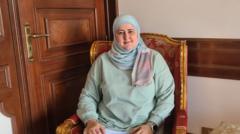
In the wake of ongoing turmoil in Lebanon caused by a spiraling conflict with Israel, Hania Zataari, a mechanical engineer working for the Ministry of Industry, has employed her expertise to assist those affected by war. Originating from Sidon in South Lebanon, she coded a WhatsApp chatbot referred to as an "aidbot," significantly enhancing the accessibility of crucial support for displaced individuals.Hania's initiative stems from the dire circumstances faced by countless families forced from their homes. "They lost their houses, their savings, their work, everything they built," she explained, highlighting the tragic impact of the conflict. The recent escalation on September 23, marked as one of Lebanon's most violent days in nearly two decades, resulted in significant loss of life and mass displacements following extensive Israeli attacks on Hezbollah targets.As families flocked to Sidon seeking shelter, many were left without government assistance and found refuge in public spaces or with relatives. Recognizing the challenges these individuals faced, Hania utilized her coding prowess to bridge the chasm between the urgent need for aid and the distribution efforts.Her "aidbot" operates through WhatsApp, guiding users with straightforward queries regarding the assistance they require, including their names and locations. These details feed into a Google spreadsheet, allowing Hania and her volunteer team to efficiently organize the distribution of critical supplies such as food, blankets, and medical essentials.This initiative operates transparently, with a publicly accessible dashboard that tracks donations and distribution efforts. To date, Hania has successfully delivered hundreds of essential items—the demand is indisputably high, yet resources are dwindling amid Lebanon's long-standing financial crisis.The plight of displaced families is epitomized by Khaldoun Abbas, who fled his devastated home in Najjarieh. Living with 17 family members in a cramped apartment in Sidon, he described the relief provided through the aidbot's facilitated requests for basic necessities like baby formula and mattresses.Despite the hopeful strides made by Hania's project, external factors continue to obstruct aid distribution. Local volunteer Bilal Merie highlights the stark reality of limited supplies in light of overwhelming demand while the economic crisis further exacerbates the situation. Nevertheless, Hania's humanitarian technology shines as a beacon of hope—though research indicates challenges in scalability, the bot represents innovative progress tailored to local communication channels during humanitarian crises.While the aidbot alone can't resolve all the complexities Lebanon faces, to those utilizing it, it undeniably offers a flicker of relief amidst the adversity of war.

