In brief
A recent study confirmed that volcanic eruptions once shaped the far side of the Moon, revealing new insights into its geological history and composition.
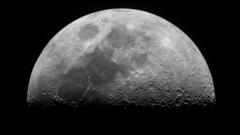
In a groundbreaking discovery, scientists have confirmed that volcanic activity occurred on the far side of the Moon billions of years ago. An analysis of samples collected by China's Chang’e-6 mission revealed fragments of basalt, a volcanic rock, dating back over 4.2 billion years. The findings were published in esteemed journals, Nature and Science, marking a significant leap in lunar research.Previously, volcanism was primarily noted on the near side of the Moon, which remains visible from Earth. The far side, often shrouded in mystery due to limited exploration, showcases a distinct geological makeup. The Chang’e-6 mission, which successfully collected the first samples from this hidden lunar terrain, faced numerous challenges over nearly two months. Researchers from the Chinese Academy of Sciences utilized radiometric dating techniques for the volcanic rock analysis. Remarkably, the study identified a more recent eruption, approximately 2.83 billion years ago, an event that has not been observed on the near side. Professor Qiuli Li of the Institute of Geology and Geophysics hailed the research as monumental for lunar science.Interestingly, the "dark side" of the Moon, as it is colloquially dubbed, receives ample sunlight, yet remains unseen from our vantage point on Earth due to the Moon's tidal locking, which results in one hemisphere perpetually facing our planet. The first glimpse of the far side was captured in 1959 by the Soviet spacecraft Luna 3, revealing previously unknown lunar landscapes. Subsequent missions, including advancements by NASA, have returned higher-quality images and new data concerning this enigmatic region.As lunar exploration continues to evolve—with missions like Chang'e-6 enabling groundbreaking research—humanity edges closer to unlocking the Moon's secrets, reshaping our understanding of its geological history and potential resources. The implications of these findings could pave the way for future lunar missions as well as discussions regarding lunar sovereignty amid emerging space activities.