
In brief
In a complex geopolitical landscape, President Trump finds himself balancing the delicate aftermath of Israel's strike on Hamas in Qatar. While he expresses regret for the incident, he stops short of condemning Israel's actions, instead suggesting it could lead to peace. Trump's comments come amid concerns regarding U.S.-Qatar relations and ongoing hostilities in Gaza. Foreign officials have disputed the timing of American notifications about the strike, raising questions about the implications for U.S. interests in the region.
WASHINGTON (AP) — President Donald Trump is facing challenges in the wake of Israel’s recent attack on Hamas officials in Qatar. He has distanced himself from the strike, opting not to condemn Israel for a bold action on allied territory.
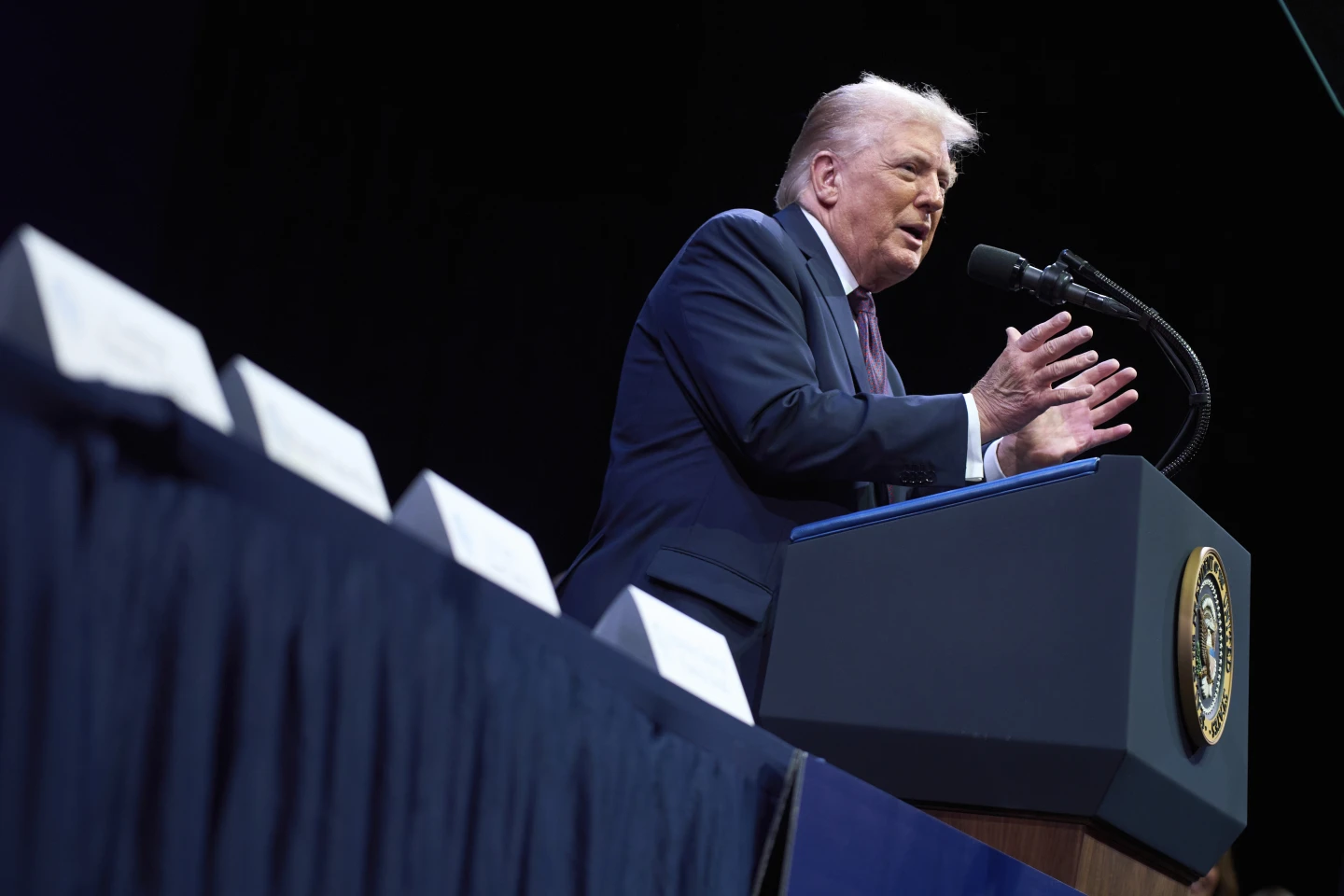
During his remarks, Trump stated that the unilateral military action commanded by Israeli Prime Minister Benjamin Netanyahu “did not advance Israel or America’s goals.” Despite this, he notably refrained from criticizing Israel and instead implied that this incident might provide an opening for peace.
“This was a decision made by Prime Minister Netanyahu, it was not a decision made by me,” Trump articulated on social media shortly after the strike.
Trump’s intent appears to be to reassure a Gulf ally that plays a crucial role in mediating U.S. relations with Iran and its affiliates amidst the escalating conflict with Hamas. The presence of approximately 10,000 U.S. troops stationed at the Al Udeid Air Base in Qatar adds a layer of complexity to the situation.
In light of the attack, Trump mentioned he had instructed special envoy Steve Witkoff to alert Qatar about the impending military operation, asserting that the warning was unfortunately too late.
However, Qatar's Foreign Ministry spokesman Majed al-Ansari later denied that any warning had been issued prior to the strikes.
Strengthening Relations with Qatar
Qatar has expressed interest in enhancing its relationship with Trump since his return to office and has even gifted him a $400 million Boeing 747 jet intended for refurbishing as a new Air Force One. Post-term, Trump stated the plane would be donated for museum display.
“I view Qatar as a strong Ally and friend of the U.S., and feel very badly about the location of the attack,” Trump shared.
Notably, Qatar has faced scrutiny due to its longstanding financial support for Hamas, reportedly funneling millions to the Gaza Strip before the latest war. It has also hosted significant figures from groups such as the Taliban and the Muslim Brotherhood.
In his statement, Trump highlighted that “eliminating Hamas” remains a “worthy goal.” His delicate approach aims to mitigate potential fallout with Qatar while addressing the broader conflict that has embroiled the region.
The White House has not clarified the exact timing of notifications given to Qatar or whether there are concerns about potential forewarnings to Hamas regarding the Israeli attacks. Hamas stated that while top leadership survived, five lower-ranking members perished as a result.
U.S. Military Response
A U.S. official explicated that while the military received advance notice of the Israeli action, the details were lacking, described as “vague.” Such insufficient warning hindered the capacity for regional alerts.
Former counterterrorism analyst Jonathan Schanzer noted that public comments from the White House may serve to protect Qatar’s standing while maintaining U.S. influence in the region.
“It’s damage control,” added Schanzer, referring to the complexities at play among involved parties.
In the aftermath of the strike, Trump has communicated with both Netanyahu and Qatar’s emir, Sheikh Tamim bin Hamad Al Thani, assuring them of U.S. commitments to prevent similar occurrences in the future.
When questioned about possible consequences for Israel following the unexpected strike, White House press secretary Karoline Leavitt remained noncommittal.
Trump also hinted at new proposals for exchanging remaining hostages for Palestinian prisoners, stating, “I have warned Hamas about the consequences of not accepting. This is my last warning, there will not be another one!”
Though officials denied the connection of Trump's warnings to the Doha strike, the geopolitical implications remain profound as tensions escalate in the region.
