In brief
The ongoing wildfires on Amsterdam Island have prompted significant evacuations and raised alarms over the potential ecological damage and disruption to vital climate research.
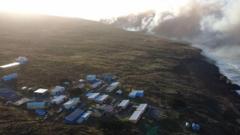
Amidst an alarming wildfire crisis, Amsterdam Island, a scientifically important French territory located in the southern Indian Ocean, has been engulfed in flames for nearly a month. Spanning approximately 54 square kilometers, around 55% of this uninhabited island has been consumed by flames, which are believed to have started near the Pointe Bénédicte observatory. This observatory plays a crucial role in monitoring atmospheric variables such as greenhouse gases and mercury.Since the outbreak of the fires on January 15, 31 research personnel stationed on the island have been evacuated to Réunion Island, following the efforts of the vessel Austral, which fortuitously remained in the area to fish for lobsters. Rémi Chazot, a computer scientist who was among those evacuated, emphasized the luck of their timing, given the boat's unexpected presence.The magnitude of the devastation has yet to be fully realized; however, satellite imagery reveals alarming destruction, threatening the island’s solar energy infrastructure, food supplies, and communication lines. Notably, the combination of dry conditions and gusty winds, which can reach up to 40 km/h (24 mph), has exacerbated the fire's spread, likely navigating through the island's extensive peat bog system.Conservationists are particularly concerned as Amsterdam Island harbors a rich and unique biodiversity. Serving as a breeding ground for species like the southern elephant seal and various albatrosses—including the critically endangered Amsterdam albatross—it plays a critical role in sustaining wildlife populations. Additionally, its relatively pristine environment allows for significant atmospheric research without pollution interference, making the suspension of research activities, occurring for the first time in 45 years, all the more critical.In response to the crisis, a French navy team is currently deployed on a reconnaissance mission with the dual aim of securing the scientific settlement and investigating the fire's origin and trajectory. Marc Delotte, head of the Laboratory for Climate and Environmental Sciences (LCES), noted the substantial impediment this incident would present to ongoing research, expressing the long-term implications for data integrity from such a unique ecological locale.As efforts unfold to contain the blazes, questions about future ecological recovery and restoration of research activities remain paramount, both for the island and the broader implications for climate science.