In brief
On October 30, Israeli forces razed the homes of two Palestinians charged with killing Israeli soldiers during a shooting on October 23. The demolition marked the eighth day of a military operation that has already uprooted 537 families in Hebron’s al‑Jilda and Deir Baha neighborhoods, according to the Hebron Governorate Emergency Committee. Israel says it will continue offensive measures to protect residents, but critics question the broad impact of such demolitions on civilian populations.
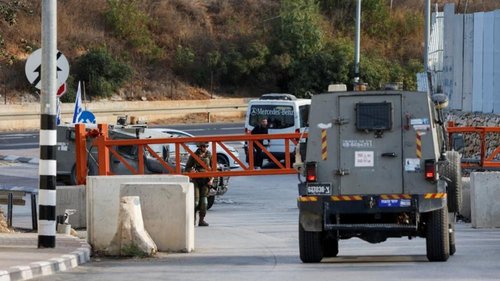
Israeli troops demolished the homes of two Palestinians, Hamoudeh and Ahmed al‑Jaabari, on Friday, Oct. 30, as the military operation in the southern West Bank city of Hebron entered its eighth day. The demolitions followed the killing of two Israeli soldiers by the pair during an attack on Oct. 23 in the Farsh al‑Hawa area and were carried out by engineering units that were stationed in the Deir Baha district, west of Hebron.
The two men were killed by Israeli forces, but their residences were destroyed in a separate action that the Xinhua agency reported as “blowing up the homes.” The Israeli military said it would “continue to operate proactively and offensively” to thwart attacks in the West Bank and to “protect residents in the area.” The statement was released shortly after the demolitions and did not detail any investigation or judicial process concerning the accused.
Background of the Hebron Operation
The operation was launched hours after the Oct. 23 shooting in Farsh al‑Hawa, when Israeli forces entered Hebron and began targeting suspected participants of the attack. According to Palestinian security sources, Israeli troops had deployed reinforcements to the Deir Baha area, a west‑Hebron suburb that has seen repeated clashes. The military’s presence has been described as a “massive displacement operation,” with the Hebron Governorate Emergency Committee reporting that 537 families – a total of 3,361 people – had been displaced from the al‑Jilda and Deir Baha neighborhoods since the operation began.
These displaced households represent a proportion of the broader population that has lived in Hebron for generations. While the Israeli army emphasizes security concerns, Arab community leaders, and several human‑rights observers, have raised questions about the proportionality of demolitions and the long‑term impact on Israeli‑Palestinian relations in the region.
One open question is how the house demolitions align with international law and customary rules of engagement. Legal analysts from the Israeli Government’s legal advisory office are cited by the Israeli statement as supporting the operation, but independent experts—including members of the United Nations Human Rights Council—have called for full investigations into potential violations of the Fourth Geneva Convention.
Impact on Civilian Populations
Destruction of homes reverberates through the communities that had already endured repeated detention and obstruction of movement. In their statement, the Hebron Governorate Emergency Committee highlighted the psychological and economic strain on displaced families, many of whom lost access to local schools, health facilities, and marketplaces. The committee’s statistics show a rapid increase in displaced households, with 27 families moving out in the first week, 112 in the second, and a surge of 29 families in the seventh week.
While the Israeli Ministry of Defense claims that its actions target individuals who pose a threat, Palestinian civil society groups argue that the “collective punishment” of households associated with alleged perpetrators is inconsistent with established jurisprudence on proportionality. These groups have appealed to international mechanisms, requesting inquiries from the International Criminal Court.
Experts from the Palestinian Center for Human Rights (PCHR) added that the demolitions have exacerbated existing tensions over land ownership, especially in the contested Deir Baha area, where claims by Israeli settlers and Palestinian residents overlap. PCHR’s analysis indicates that the continued demolitions could set a precedent for large‑scale displacement in other West Bank locales.
At the same time, Israeli officials argue that proactive demolition of suspected attackers’ homes is a necessary deterrent to prevent future attacks. The Israeli defense ministry believes that such measures “are essential to ensure the safety of Israeli citizens”, a stance that has been defended in multiple press releases since the operation began.
Both sides have requested apologies and reconciliatory measures from the other. The Israeli military has sent a note to regional authorities indicating that it “will continue to investigate all civilian casualties and forcibly occupied houses”. In contrast, the Hebron Governorate has demanded that the international community intervene to halt the demolitions and to facilitate the return of displaced families.
As the operation moves into the ninth day, with additional clashes reported across the West Bank, the situation in Hebron remains highly sensitive. Humanitarian organizations have increased calls for ceasefire in the region, fearing that ongoing demolitions and displacement will further destabilize the already fragile socio‑political landscape.
The Xinhua report does not specify any compensation for the families displaced by the house demolitions, nor does it report any immediate legal proceedings against the Israeli forces involved. Nonetheless, the statement reflects the broader narrative that the Israeli forces will “continue to operate proactively and offensively.” The international community, meanwhile, is monitoring the situation closely, with several UN agencies threatening to review the legality of the operation if civilian displacement continues to accelerate.
In summary, the demolitions of Hamoudeh and Ahmed al‑Jaabari’s homes mark a continuation of the Israeli military’s policy to dismantle houses of those accused of killing soldiers, a policy that has already forced over 50% of the 3,361 people displaced in Hebron to seek shelter elsewhere. The complications around Western Bank security and human rights remain a pressing issue, with both sides presenting divergent legal and moral arguments regarding the right to demolish and the humanitarian consequences for civilians.