
In brief
The discovery of Tugunbulak and Tashbulak, high-altitude cities linked to the historic Silk Road, reveals a previously unknown aspect of trade routes between East and West. Scholars believe these settlements flourished between the 8th and 11th centuries, prompting a reevaluation of Central Asian history.
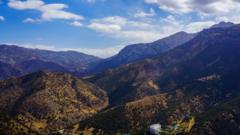
In a groundbreaking revelation, archaeologists have identified the remains of two medieval cities nestled in the mountainous region of eastern Uzbekistan, a development that could significantly enhance our comprehension of the Silk Road's historical dynamics. Traditionally, it was believed that the Silk Road facilitated the exchange of goods and ideas primarily through lowland cities, but advancements in remote-sensing technology have unveiled at least two important highland settlements located along a vital crossroad.One noteworthy site, Tugunbulak, covers over 120 hectares and lies over 2,000 meters (6,600 feet) above sea level—a surprising altitude for urban development, even in contemporary times. “The history of Central Asia is now changing with this finding,” stated archaeologist Farhod Maksudov, who contributed to the research team.The researchers propose that Tugunbulak and the smaller adjacent city, Tashbulak, thrived between the 8th and 11th centuries under the influence of a prominent Turkic dynasty. Today, only about 3% of the global population inhabit such high altitudes, with Lhasa in Tibet and Cusco in Peru being rare exception cases. The study, led by Maksudov from the Uzbekistan National Center of Archaeology and Michael Frachetti from Washington University in St. Louis, leveraged drone technology equipped with lidar—a tool that utilizes reflected light to produce detailed 3D maps of the area's geography. Their findings were published in Nature this week, receiving acclaim for shedding light on the lives of nomadic communities.The journey to this discovery traces back to 2011 when the team first noted signs of habitation such as burial sites and pottery fragments while exploring the region. Even though historical texts hinted at the existence of cities in these highlands, the actual find of a 12-hectare medieval settlement at such altitude astounded the researchers. “We were kind of blown away,” Frachetti remarked, noting the various physical challenges they encountered during their expeditions.A fortunate tip-off from a local forestry official in 2015 led the team to excavate another site nearby, which turned out to host a medieval citadel right beneath the official's home. Convincing the academic community of the existence of these cities proved to be a point of contention, as skeptics questioned the extent of the finds, often dismissing them as mere mounds or castle remnants.In 2022, a return to the site equipped with a specialized drone made it possible to uncover the intricacies of Tugunbulak’s structures, including walls, towers, and other defensive features. The research team theorizes that communities may have been drawn to these highland settlements to harness wind energy necessary for iron smelting, an activity linked to power during the medieval period. Preliminary digs have also revealed kilns used for this very purpose.Maksudov warned, however, that the same factors that made the region viable for settlement may have contributed to its downfall, as extensive deforestation for iron production destabilized the ecosystem and made it prone to natural disasters. This layered complexity defies traditional archaeological expectations that settlements would be lower in the valley, making these discoveries all the more remarkable."This amazing treasure trove shows the deep interconnections crisscrossing Asia, as well as the historic links between resource exploitation and societal power," commented Peter Frankopan, a global history professor at Oxford. The rarity of high-altitude urban sites presents unique challenges for archaeologists, with Zachary Silvia from Brown University noting that the research team's work represents a substantial contribution to understanding medieval urbanism in Central Asia.
