In brief
The 12th edition of Gulfood Manufacturing in Dubai closed with a focus on advanced technologies to enhance food security. Vice President of inD Mark Napier praised the event’s commercial engagement and international turnout, noting Dubai’s role as a resilient hub. The exhibition will relocate to Dubai Exhibition Centre for its 2027 edition.
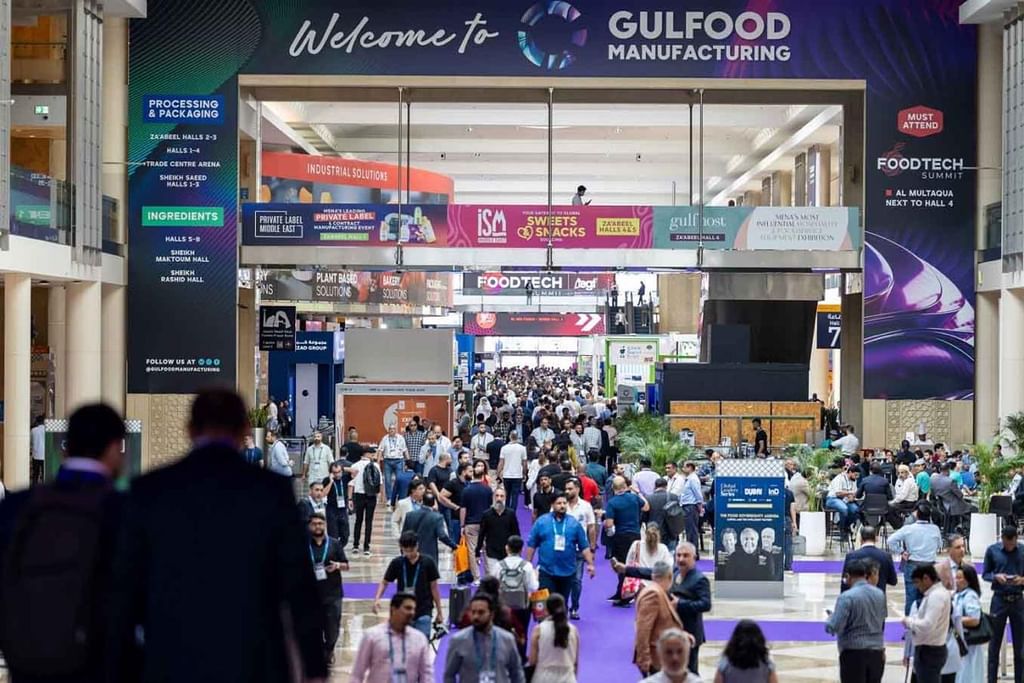
At the Dubai World Trade Centre, the 12th edition of Gulfood Manufacturing ended on November 6, as global buyers and decision‑makers gathered to explore cutting‑edge production lines aimed at strengthening food security. The show was part of a quartet of co‑located exhibitions that included GulfHost, ISM Middle East and Private Label Middle East, linking the entire food production, retail and hospitality chain‑from ingredients to finished goods and service equipment.
Mark Napier, Vice President of inD, said the event demonstrated the "continued strength of the global food manufacturing industry". He added that the level of serious commercial engagement was "particularly encouraging", with buyers exploring new production lines, evaluating major equipment investments and progressing real business opportunities. Napier noted that the strong international participation "reflected Dubai's resilience and its ability to support global business amid economic and geopolitical uncertainty". He highlighted that food security depends on a reliable network of factories, equipment, ingredients and logistics services.
Technology on Show and its Impact on Food Security
The exhibition highlighted a suite of technologies designed to improve productivity, maintain product quality, optimise resource consumption and reduce operating costs. These solutions enable manufacturers to build more efficient, future‑ready facilities that can adapt to shifting market demands. Experts at the event warned that without such efficiency gains, the food industry would struggle to meet rising demand while managing supply‑chain disruptions, a challenge that has become more acute in the current geopolitical climate.
WAM reported that exhibitors showcased autonomous processing lines, digital twins for plant design, robotic packaging systems and real‑time analytics platforms for monitoring energy usage. While the outlet did not provide detailed metrics, it underscored that these innovations aim to tighten integration across the production, packaging and distribution stages—an integration seen as critical for supply‑chain resilience.
Industry analysts note that the push toward automation and data‑driven manufacturing is a response to both cost pressures and the need for faster scaling. WAM cited industrial capabilities such as precision milling and temperature‑controlled fermentation as examples of how advanced tech can boost output while conserving resources. These capabilities, the report added, can help manufacturers maintain consistent product quality, which is essential for consumer trust and regulatory compliance.
Despite the optimism, the event also revealed open questions. WAM mentioned that many exhibitors remained alert to the risks posed by fluctuating commodity prices and regional political tensions. Experts expressed concern over whether the new technologies, often expensive, would be adopted by smaller manufacturers who might lack capital to invest in high‑tech equipment.
The gulf between large, well‑funded companies and smaller players is a recurring theme in discussions on food security. According to WAM, the trade show’s panels touched on strategies for scaling technology, including tiered financing models and public–private partnerships. While no specific policy proposals emerged, the dialogue pointed to a broader recognition that food security hinges on inclusive technology adoption.
Looking forward, WAM confirmed that the next edition of Gulfood Manufacturing will move to the Dubai Exhibition Centre at Expo City Dubai for the 1st to 3rd November 2027. The relocation is part of a strategic shift to expand the venue’s capacity and to align with Dubai’s broader economic development plans, which aim to position the city as a global logistics and trade hub.
As the industry prepares for the next phase, stakeholders continue to debate how best to balance investment in high‑tech production with broader supply‑chain resilience. The 2026 exhibition provided a snapshot of the tools and conversations that are shaping a more secure food system, while leaving key questions about accessibility, financing and global cooperation still open for further discourse.