In brief
On Friday, a Chinese film festival began in New Delhi under the theme “Two Nations, One Screen.” About ten Chinese feature films were screened for an audience of Indian arts and film professionals, with officials emphasising the event’s potential to reinforce diplomatic relations and spur future co‑productions. The festival, jointly hosted by the Chinese embassy, the Delhi International Film Festival, and India’s National School of Drama, marks the first Indian‑based Chinese film festival in more than ten years.
A Chinese film festival opened in New Delhi on Friday, marking the first event of its kind in the Indian capital in more than a decade. With a concise program of about ten Chinese films, the two‑day showcase was held on 31 October at the Films Division Auditorium, a venue situated in the heart of the city.
The theme of the festival, “Two Nations, One Screen,” was chosen to highlight the shared cultural narratives between China and India. By concentrating on this concept, the organizers aimed to create a bridge that encompasses cinema, culture, and traditions, thereby reinforcing bilateral relations.
Participants came from a wide range of Indian sectors, including the arts, cinema, academia, and aficionados of film. The diversity of the audience underscored the significance of the festival as a cultural meeting point for creative professionals and film enthusiasts alike.
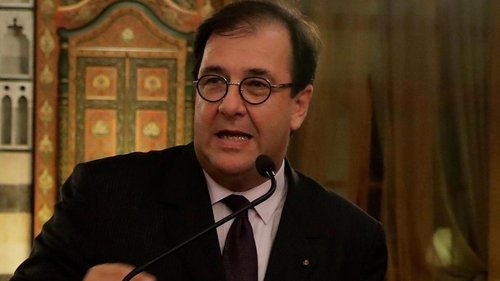
At the opening ceremony, Ram Kishore Parcha, president of the Delhi International Film Festival (DIFF), highlighted the expected benefits of the event. “The film festival is expected to help build a new bridge encompassing cinema, culture, traditions, and our bilateral relations,” he said. He went on to assert that the festival would unlock “fresh avenues for co‑productions and artistic exchange between film‑makers from both the nations.”
Officials from the Chinese embassy emphasised the festival’s role in strengthening bonds between the two countries. The embassy’s participation signals the importance that Beijing places on cultural diplomacy as a tool for enhancing diplomatic and economic ties with India.
Through the joint effort of the DIFF in partnership with the National School of Drama, an autonomous institution funded by India’s Ministry of Culture, the festival benefits from the expertise of a key Indian cultural institution. The partnership aims to provide learnings and support to both film industries.
Although the event’s focus is on cultural exchange, the festival’s outcome is also a question for observers. Will the co‑production initiatives hinted at during the opening actually materialise in the months ahead? Will a stronger relationship formed through this festival translate into collaborative projects on cinema?
The festival’s program included screenings of ten Chinese feature films. While the specific titles were not listed by Xinhua, the commitment to present a concise yet representative selection demonstrates the organisers’ desire to showcase a range of Chinese cinematic works to an Indian audience that has not frequently had such exposure.
The venue, the Films Division Auditorium, is a historic location for Indian film production and animation. The choice of venue reflects a symbolic alignment between Indian film production infrastructure and Chinese cinematic culture. In holding the festival at such a site, organisers hoped to emphasise a sense of continuity within the India‑China cinematic dialogue.
In closing, the festival’s launch has been described as an auspicious moment for cultural diplomacy between the two nations. By combining the visual art form of film with the broader themes of cultural exchange, the event is expected to deepen mutual understanding and unlock future joint creative ventures.