In brief
Karve's pioneering research and empathetic worldview laid a foundation for modern anthropology and women's rights in India.
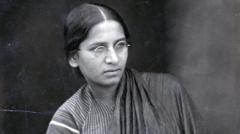
In an era defined by rigid gender roles and colonial restrictions, Irawati Karve emerged as a trailblazer in anthropology and women's rights. Born in 1905 in Burma, now Myanmar, Karve reshaped societal expectations and defied the norms prevalent in British India. The only daughter among six siblings, she was raised in a nurturing environment, which later facilitated her pursuit of higher education abroad.Her academic path was anything but conventional; Karve ventured to Berlin to study anthropology, despite opposition from her family. Her journey was supported by influential figures like RP Paranjpye, who was pivotal in her education and worldview. Under the mentorship of Eugen Fischer, a prominent but controversial anthropologist steeped in eugenics, Irawati encountered the disturbing realities of rising anti-Semitism in Germany. Witnessing the aftermath of a brutal murder of a Jewish student profoundly affected her perspective on humanity.Karve's research was not only groundbreaking but countered the prevailing fallacies of racial superiority. While working on her doctorate, she courageously refuted Fischer's hypothesis by demonstrating a lack of correlation between skull shape and intelligence across races. In doing so, she placed her academic standing at risk, ultimately receiving a poor grade but securing critical recognition for her integrity and scientific rigor.Her commitment to social justice continued upon her return to India, where she traveled extensively, documenting and studying the diverse lives of tribal communities. Karve faced substantial societal challenges, often venturing alone or with little resources into remote areas, where she fostered an understanding of different cultures. This experience deepened her compassion, influencing her later critiques of religious fundamentalism—asserting that India is home to many, not just one identity.Through her work, Karve paved the way for future generations of scholars and activists dedicated to social equity and understanding. A new book written by her granddaughter, Urmilla Deshpande, shines a light on her extraordinary life, celebrating her legacy that inspires both men and women to challenge societal norms. Irawati Karve passed away in 1970, but her influential writings and ideologies continue to resonate today, championing the cause of inclusivity and understanding in a world still grappling with racial and cultural divisions.