In brief
On 2 November 2026, H.H. Sheikh Khaled bin Mohamed bin Zayed Al Nahyan met with OpenAI CEO Sam Altman to discuss AI cooperation and witnessed the signing of four agreements. The deals cover government transformation, energy operations, investment strategies and the launch of a machine‑readable government initiative. The move positions the UAE as a global AI hub and marks the first time an energy company, ADNOC, deploys OpenAI GPT models on in‑country infrastructure.
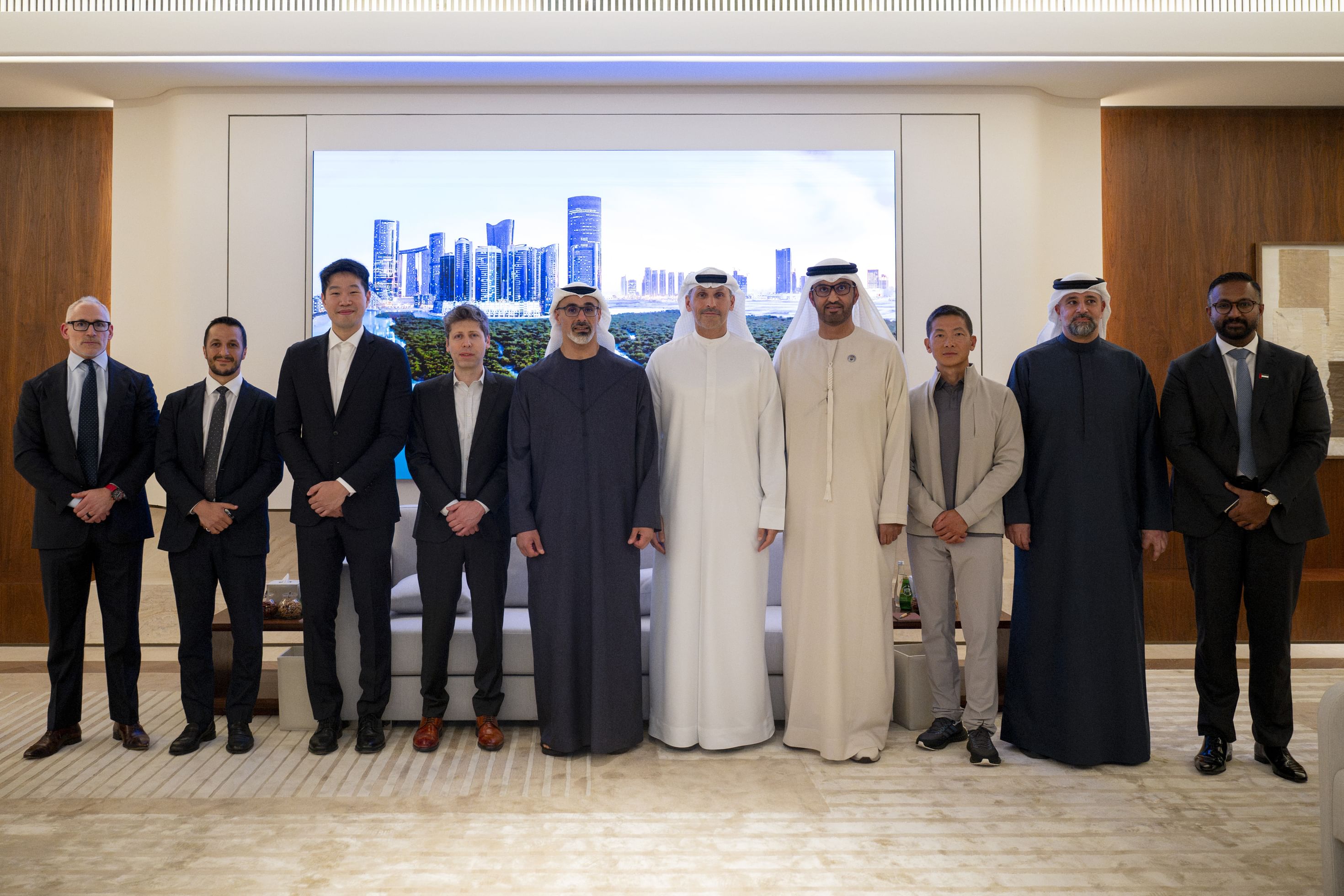
In Abu Dhabi on 2 November 2026, H.H. Sheikh Khaled bin Mohamed bin Zayed Al Nahyan, Crown Prince and Chairman of the Abu Dhabi Executive Council, met with Sam Altman, CEO of OpenAI, to discuss new avenues of artificial‑intelligence collaboration. After a brief exchange about the emirate’s AI ambitions, the two leaders witnessed the signing of four agreements between Abu Dhabi‑based entities and OpenAI, covering government, energy and investment sectors.
The summit was held at the Abu Dhabi Executive Council headquarters, where Altman highlighted the UAE’s leadership in pushing a "global standard for AI integration across both the public and private sectors," according to WAM. Altman underscored a shared commitment to safety, accessibility and responsible innovation as the basis for the partnership:
"Abu Dhabi and the UAE are setting a bold, global standard for AI integration across both the public and private sectors to make sure the benefits of AI reach everyone. We are proud to support the UAE’s ambition, anchored in a shared commitment to safety, accessibility and responsible innovation."
One of the key deals saw Abu Dhabi National Oil Company (ADNOC) and G42, via its subsidiary Inception42, sign an agreement making ADNOC the first energy firm to deploy OpenAI’s frontier technology. The pact will incorporate advanced AI across ADNOC’s operations, aiming to support "more connected operational, investment and commercial decision‑making to enhance efficiency and productivity," WAM noted. The collaboration will use GPT models with in‑country inference infrastructure, allowing the energy giant to remain technologically and AI‑enabled while keeping data within UAE borders.
A second agreement involved the Abu Dhabi Government and OpenAI, launching what WAM calls the world’s first AI‑native Machine‑Readable Government initiative. The project translates a defined set of government policies and regulations into machine‑readable form, enabling AI‑powered systems to assist officials with routine regulatory compliance assessments. "This is a key step towards the emirate’s ambition to become the world’s first AI‑native government," WAM said, though specific technical and legislative frameworks for the initiative remain undisclosed.
The remaining two agreements focus on investment and broader sectoral collaboration. While WAM provided no granular detail on the investment sector pact, it emphasized the UAE’s broader strategy to position itself as a global hub for AI innovation and deployment. The investment agreement is described as part of the emirate’s ambition to accelerate the growth of AI‑driven startups and attract foreign capital into domestic AI ecosystems.
Prior to the signing, Sheikh Khaled outlined a broader vision that includes "continued investment in digital infrastructure and national talent development" as part of the UAE’s push to become the first fully AI‑native government. He emphasised that the nation’s AI strategy is grounded in "safety, accessibility and responsible innovation," echoing Altman’s similar pledges.
Observers note that the agreements solidify the UAE’s position as a leading AI playground in the Middle East, yet several open questions remain. For instance, the technical specifics of the Machine‑Readable Government initiative, such as compliance mechanisms and oversight bodies, have not been disclosed. Likewise, the terms of data sovereignty and security within the ADNOC deal, particularly regarding in‑country inference infrastructure, have yet to be clarified by either the UAE or OpenAI.
The timing of the meeting also coincides with heightened global scrutiny of AI technology. Critics have raised concerns about the balance between rapid deployment and regulatory oversight. How the UAE will navigate these concerns—especially in high‑stakes sectors like energy—will be closely watched by international regulators and industry peers.
WAM highlighted that the agreements could transform how government services, energy pipelines, and investment decisions are made, raising hopes that AI integration will accelerate policy implementation and operational efficiency. However, due to the limited disclosure on contractual details, the practical impact on day‑to‑day operations is still speculative.
As the world awaits further development, the Abu Dhabi and OpenAI partnership stands as a clear signal of the UAE’s commitment to becoming a global AI leader while simultaneously asking the community to remain vigilant about the governance of such transformative technologies.