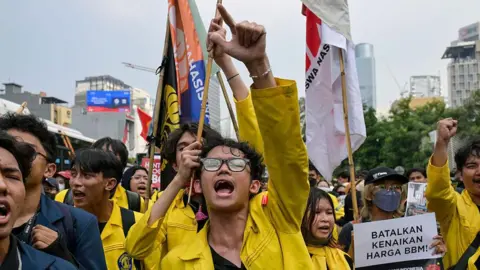
Recent protests in Asia, notably Nepal and Indonesia, have been sparked by Generation Z's outcry against corruption and social inequality, primarily fueled by social media. The catalyst for these protests was a high-profile wedding of a politician's daughter that resulted in significant public outrage, particularly among youth activists like Aditya, who were appalled by the perceived misuse of state resources.
As social media posts detailing extravagant lifestyles of politicians' children gained traction, a movement dubbed 'Gen Z Rebels' surged, mobilizing thousands onto the streets. The protests have resulted in violence and significant political changes, including the resignation of Nepal’s Prime Minister amidst clashes that left dozens dead.
Young demonstrators across other Asian nations, such as the Philippines, have taken similar stances, utilizing platforms like TikTok to rally support and share their messages. The common thread among these uprisings is a collective frustration with entrenched corruption and a desire for democratic reform.
Despite the authorities' attempts to crack down, the youth continue to harness technology for organization, leading to a growing sense of solidarity across national borders. However, experts caution that while these protests evoke strong sentiments, their leaderless nature might hinder the prospect of sustained political engagement and true systemic change.