In brief
Earth continues to experience unprecedented warmth, as January 2025 emerged as the hottest January recorded globally, surprising climate scientists. This anomaly occurred amidst La Niña conditions, which typically result in cooler temperatures. Researchers are now exploring potential changes in the planet's atmospheric chemistry that may be contributing additional heat beyond carbon emissions, which remain a primary driver of climate change. Historically, La Niña periods led to lower average global temperatures, but various factors continue to complicate the climate scenario. Though predictions indicate that 2025 may not overtake the previous two years as the hottest yet, confidence in those forecasts has waned.
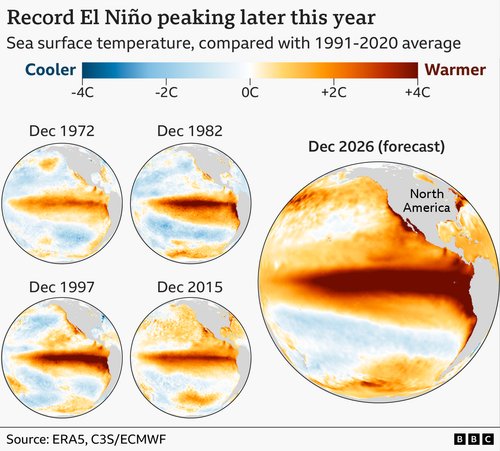
January 2025 broke global temperature records, raising concerns about climate dynamicsEarth's trend of extreme warmth persisted into January 2025, which was officially recognized as the hottest January on record, according to scientific reports. Notably, this record-breaking heat emerged in a month associated with La Niña conditions—the oscillation pattern in the Pacific Ocean known to contribute to regional cooling effects.Scientists had anticipated that 2025 would be slightly cooler than its warm predecessors, 2023 and 2024, but January proved otherwise. Observations indicate that Earth’s surface temperature has been consistently elevated, leading experts to investigate whether other chemical changes in the atmosphere could be amplifying global temperatures beyond what carbon emissions could account for alone. Historically, greenhouse gases from burning fossil fuels have been identified as the main contributors to climate change, resulting in record high temperatures recently. La Niña conditions typically indicate a cooler global average temperature; however, the persistence of high temperatures during this period implies that other factors may be influencing climate patterns. NOAA climate scientist Russell Vose noted that while it may seem unlikely for 2025 to be recorded as the hottest year, the previous year’s predictions were incorrect about 2024's temperature outcomes.As the climate crisis evolves, scientists continue to study the multiple factors affecting global temperatures, emphasizing the need for a comprehensive understanding of how different climate systems interact.