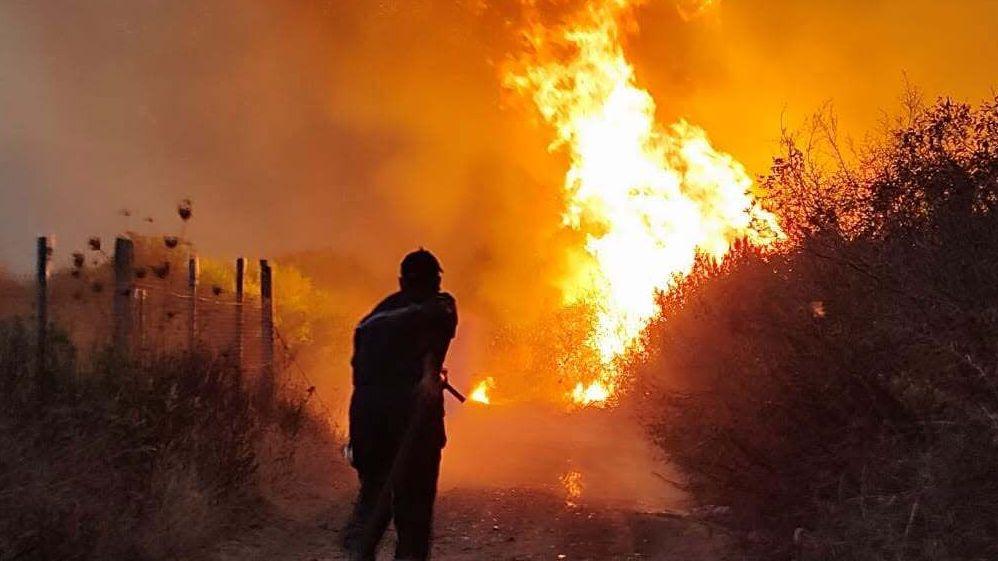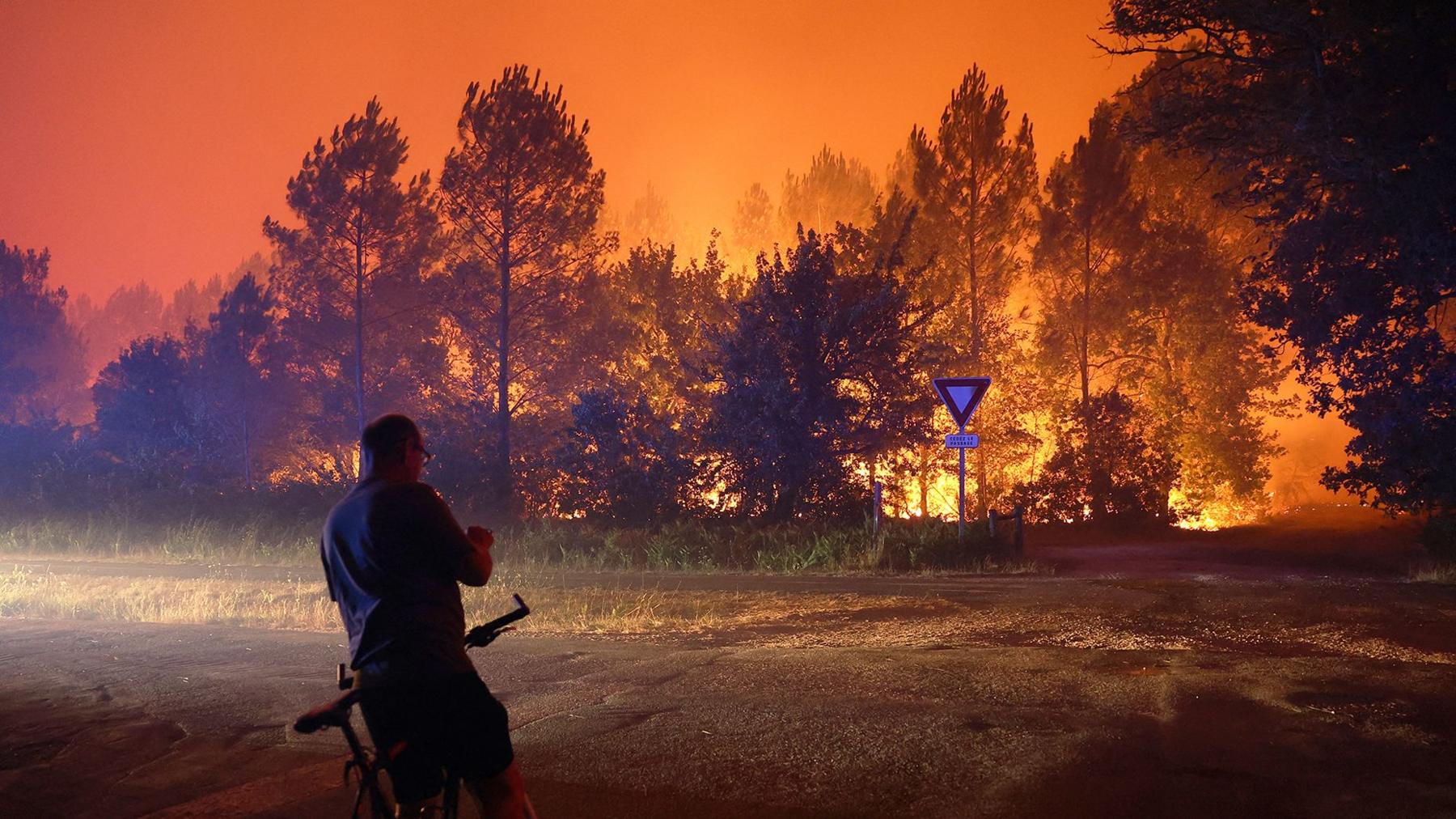
Around 12,000 people have been evacuated from the south‑west of France as the country battles ongoing wildfires days after two firefighters died near Bordeaux airport, French media reported.
The Gironde region has lost more than 2,000 hectares (about 4,000 acres) of forested land, the government confirmed.
Firefighting protocols now ban internal combustion and electric engines in forested zones, and several roads have been shut to prevent further ignition; no injuries were reported during Thursday’s operations.
In Italy, authorities mourned the death of a firefighter in San Cataldo, Sicily, while another firefighter received a “speedy recovery” wish from President Renato Schifani. Interior Minister Matteo Piantedosi marked the fallen firefighter as a community hero.
Sicilian Civil Protection head Salvo Cocina reported over 350 fires on the island, including ten major blazes that forced evacuation warnings. He said many of the blazes had human causes, turning firefighting into a public‑order issue.
The French AFP agency noted that 10,000 tourists were among those displaced – the heart of the region’s relaxed summer appeal.
Inside France, Interior Minister Laurent Nuñez shared photos from a tribute event held the day after the early‑week firefighter deaths, vocalising “infinite gratitude” and unwavering support for their families.
France remains on a red alert, with some leisure sites in exposed forest areas closing later this Thursday afternoon.
The south‑west was one of several French departments hit hard by summer heatwaves that intensified the wildfire danger.
Meanwhile, Madrid faced its own fire, but most evacuated residents can return to homes, except in Villa del Prado. A large firefighting crew and a helicopter were deployed, and the fire was under direct attack.
Spanish weather services forecast temperatures up to 36ºC in Thursday’s afternoon, creating an extreme risk of fires.
Europe as a whole has seen record summer temperatures, with the Copernicus Climate Change Service noting that 95% of the continent recorded above‑average annual temperatures last year, making it the fastest‑warming region on Earth. Wildfired area and emissions reached record peaks in 2025.