All they stand for is anger, hatred, and destruction, roared a hoarse Viktor Orban. The Hungarian prime minister was speaking at a mass election rally in Györ in western Hungary on March 27, referring to opposition protesters who chanted Filthy Fidesz during his speech. For just a moment, his carefully cultivated image as the voice of calm navigating his country through stormy seas was shattered. His bad-tempered outburst showed a different side of a man used to cracking jokes and charming even his critics.
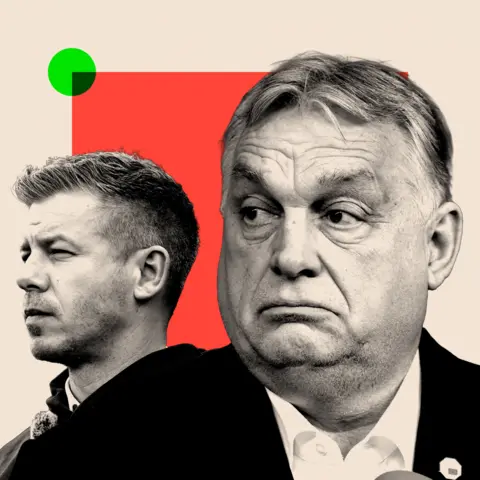
Most opinion polls put the opposition Tisza party and its leader Peter Magyar far ahead of Orban's Fidesz - the latest by 58% to Orban's 35%. And he is doing everything he can to close the gap. After 16 years of virtually unchallenged rule, Orban has been forced to take to the road again. In the past three elections, he gave few rallies. Now Europe's longest-serving leader is trying to mobilise his supporters and reach the undecided. He has just a week left to rescue his government, and the international populist movement he embodies, from a crushing defeat.
In power since 2010, Orban has had the support of both US President Donald Trump and Russian President Vladimir Putin. He has long been a thorn in the side of the EU - and one of the few EU leaders not supportive of Ukraine. For Europe's growing band of nationalist parties, in power or on the brink of it, he is the model. The April 12 Hungarian parliamentary election is being watched closely all over the world.
In January, 44% of those asked said they thought Fidesz would win, compared with 37% for Tisza. By March, 47% believed Tisza would win, while 35% believed Fidesz would. This reflects a huge change of trust. People believe that it can be changed,” said Endre Hann of the Median agency.
An intriguing dynamic is playing out in this election - the same voter anger against those seen as corrupt ruling elites across Europe is now working against Orban. In Hungary, it is now Orban and his Fidesz party who are seen by many, especially the young, as the corrupt ruling elite.
Each day brings a new indication that Orban is in trouble, from alleged voter-intimidation schemes to a dramatic Russian proposal to stage a fake assassination attempt on Orban. But Fidesz claims the sense that it's in trouble has been cooked up by the opposition. All these scandals are just the usual suspects trying to build a narrative, says Zoltan Kiszelly, a political analyst from the government think tank Szazadveg.
Political analyst Gabor Török wrote on his blog: If the remaining two weeks unfold like this, it does not bode well for the government side. A potential defeat for Orban would resonate beyond Hungary's borders. This is not just an election. This is a referendum on that whole model of authoritarian rule that Orban represents, commented Michael Ignatieff, former rector of the Central European University. The outcome of this election could have significant implications for the rise of right-wing and nationalist movements across Europe.
Most opinion polls put the opposition Tisza party and its leader Peter Magyar far ahead of Orban's Fidesz - the latest by 58% to Orban's 35%. And he is doing everything he can to close the gap. After 16 years of virtually unchallenged rule, Orban has been forced to take to the road again. In the past three elections, he gave few rallies. Now Europe's longest-serving leader is trying to mobilise his supporters and reach the undecided. He has just a week left to rescue his government, and the international populist movement he embodies, from a crushing defeat.
In power since 2010, Orban has had the support of both US President Donald Trump and Russian President Vladimir Putin. He has long been a thorn in the side of the EU - and one of the few EU leaders not supportive of Ukraine. For Europe's growing band of nationalist parties, in power or on the brink of it, he is the model. The April 12 Hungarian parliamentary election is being watched closely all over the world.
In January, 44% of those asked said they thought Fidesz would win, compared with 37% for Tisza. By March, 47% believed Tisza would win, while 35% believed Fidesz would. This reflects a huge change of trust. People believe that it can be changed,” said Endre Hann of the Median agency.
An intriguing dynamic is playing out in this election - the same voter anger against those seen as corrupt ruling elites across Europe is now working against Orban. In Hungary, it is now Orban and his Fidesz party who are seen by many, especially the young, as the corrupt ruling elite.
Each day brings a new indication that Orban is in trouble, from alleged voter-intimidation schemes to a dramatic Russian proposal to stage a fake assassination attempt on Orban. But Fidesz claims the sense that it's in trouble has been cooked up by the opposition. All these scandals are just the usual suspects trying to build a narrative, says Zoltan Kiszelly, a political analyst from the government think tank Szazadveg.
Political analyst Gabor Török wrote on his blog: If the remaining two weeks unfold like this, it does not bode well for the government side. A potential defeat for Orban would resonate beyond Hungary's borders. This is not just an election. This is a referendum on that whole model of authoritarian rule that Orban represents, commented Michael Ignatieff, former rector of the Central European University. The outcome of this election could have significant implications for the rise of right-wing and nationalist movements across Europe.