
In brief
Severe flash floods in Morocco's Safi region have resulted in at least 37 fatalities and many injuries, as torrential rains overwhelmed the city. Residents reported widespread destruction, with homes inundated and streets buried under debris. Experts link the extreme weather to climate change, highlighting the increasing severity of such events in North Africa. Rescue efforts are ongoing as the local government aims to provide immediate support to affected families.
Flash floods have killed at least 37 people in Morocco's coastal Safi region, according to state-owned television.
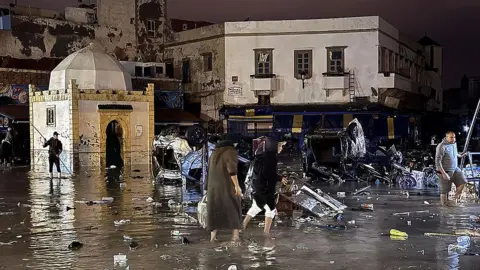
Cars and mounds of rubbish were seen sweeping through the main port city of Safi after torrential rain hit on Sunday.
Dozens of people have been receiving treatment in hospital for their injuries, say local authorities, and at least 70 homes have been inundated in the old city centre.
Local reports say access to and from the city is blocked on certain roads because of damage and debris.
Residents on Sunday described it as a dark day, with one telling the AFP news agency: I've lost all my clothes. Only my neighbour gave me some to cover myself. I have nothing left. I've lost everything. Another survivor said he wanted to see government trucks at the scene to pump out the water.
Moroccan authorities say search and rescue missions are still under way. Experts say the climate crisis is in part responsible for the extreme weather fluctuations seen in the North African state.
It has suffered seven years of drought in a row, depleting its reservoirs. Last year was officially the hottest ever on record.
This latest, sudden downpour is expected to continue on Tuesday together with snowfall across the Atlas mountains, Morocco's weather service warns.

