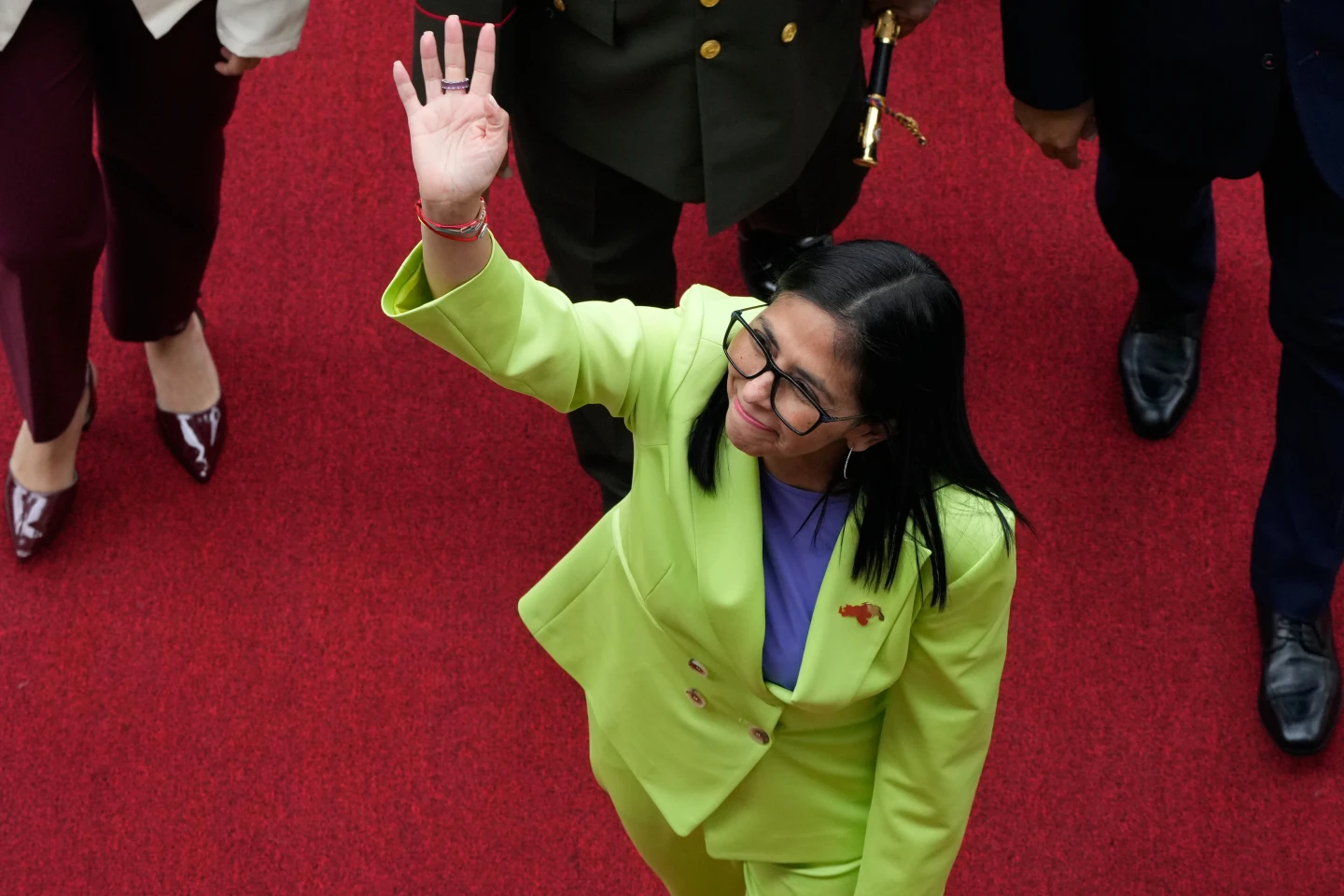
In a dramatic new chapter in Venezuelan politics, President Donald Trump has announced his strategy to stabilize the often tumultuous country by collaborating with Delcy Rodríguez, the newly appointed acting president and former vice president under Nicolás Maduro. Although Rodríguez is being presented as a potential ally in the fight against drug trafficking, her past connections to criminal activities raise significant concerns.
The DEA has classified Rodríguez as a priority target for investigations into drug trafficking and corruption, having amassed extensive intelligence on her over the years. Informants have linked her to money laundering operations and her associations with Maduro’s identified money laundering accomplices, including notorious figures like Alex Saab.
Since entering the political spotlight, Rodríguez has maneuvered through Venezuela's corrupted system, previously sanctioned by both the U.S. and the European Union for her efforts to solidify Maduro's authoritarian grip. While Trump has praised her as a capable partner, her ambiguous role in the regime complicates the U.S.'s trust.
Amidst this complex backdrop, former DEA agents and analysts caution that nothing is simple in the realm of Venezuelan power dynamics. The labeling of Rodríguez as a target might serve as leverage for the U.S. in its expectations from the post-Maduro government.
As the situation unfolds, particularly after Trump's threats concerning American access to Venezuela's vast resources, the world watches closely. Will Delcy Rodríguez prove to be a stabilizing force or remain a figure tangled in a web of alleged corruption and violence?