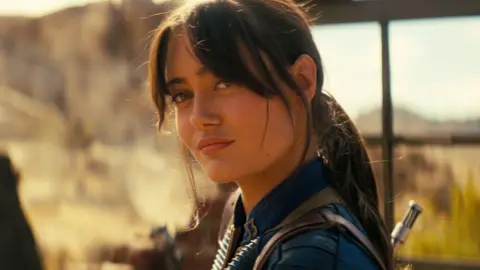
The second season of Fallout - Prime Video's mega-hit based on the popular video game series - has landed.
Set in a post-apocalyptic future where Earth has been ravaged by nuclear war, the first series was a commercial and critical hit, impressing long-time fans and viewers who'd never played before. Its surprising success had a huge impact on Bethesda Softworks, the developer of its source material, bringing back lapsed players and creating new ones along the way.
Key creatives from the company have told BBC Newsbeat about working with the show's producers, and what the success of the programme means for the future of the games.
The first season of Fallout arrived at a turning point for Hollywood video game adaptations. Often far-removed from their source material, and often just a bit rubbish, they'd gained a reputation as low-quality cash grabs. Then The Last of Us came along.
The 2023 adaptation of the PlayStation blockbuster, released ten years earlier, was a smash hit. It impressed fans of the games, as well as winning over critics and viewers who'd never picked up a controller.
But there were those who argued the show's creators were running on easy mode. Because the post-apocalyptic story of bounty hunter Joel and his adoptive daughter Ellie drew heavy influences from prestige TV shows, there was an obvious road map for bringing it to the screen. The drama's story closely followed the game's, with a few deviations, and fans pointed out shot-for-shot comparisons where sequences were almost identical to their pixelated inspiration.
While The Last of Us was wowing audiences, the producers of Fallout were putting the finishing touches to the first season of their adaptation, which took a different approach to its source material.
Unlike The Last of Us, which guides the player through a linear story experience, the Fallout games drop them into a more freeform world. The branching narratives, full of side quests and incidental characters, offer plenty of material to draw from, but deciding what to bring to the screen is a mammoth task.
Todd Howard, director of developer Bethesda Game Studios, tells Newsbeat he was first approached about a filmed version of the game in 2009. He was agreeable to the idea, he says, but didn't push ahead until meeting executive producer Jonathan Nolan. Todd, a fan of the Briton's work on HBO's Westworld, was impressed by his co-writer credits on films such as The Dark Knight and Interstellar directed by his brother, Christopher Nolan.
One of the people in charge of keeping the TV show authentic was studio design director Emil Pagliarulo, a Bethesda veteran closely involved with the Fallout series since its breakout third installment, released in 2008. He tells Newsbeat there was an early decision to keep the TV show 'canon' - that would become a guiding principle. That meant 'everything that happens in the show happened in the games, or will happen in the games,' says Emil.
As the first season of Fallout was released, prices on most of the games in the series were slashed, appealing to curious new players. It had the desired effect - Fallout 4, the most recent big title, topped sales charts nine years after its original release. When the first season of Fallout dropped, those numbers skyrocketed to an all-time high.
The big question for fans awaiting Fallout 5 - which is likely to still be years away from release - is whether the TV show will have an impact on the game. 'In short, yes,' says Todd. 'Fallout 5 will be existing in a world where the stories and events of the show happened or are happening. We are taking that into account.'
This symbiotic relationship between the adaptation and the gaming franchise exemplifies a promising direction in video game storytelling across mediums.