In brief
Wildfires are not only destroying homes but also contributing to a significant rise in air pollution-related health issues, with as many as 675,000 premature deaths each year attributed to wildfire smoke.
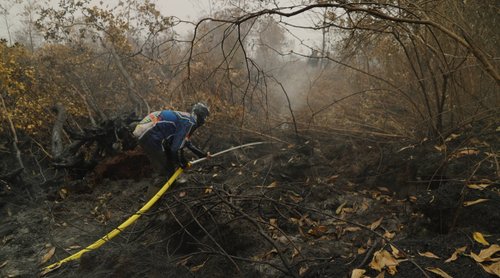
Despite being far away from raging wildfires, residents are grappling with a silent but deadly threat: the severe air pollution caused by smoke. Recent studies show that the smoke generated by wildfires—intensifying in both frequency and severity due to climate change—has become a major contributor to global health risks. It’s estimated that wildfire smoke is responsible for as many as 675,000 premature deaths each year, exceeding casualties from car accidents, armed conflicts, and drug overdoses combined.Wildfire smoke is a toxic cocktail of hazardous pollutants, including particulate matter, nitrogen dioxide, ozone, and lead. As Dr. Afif El-Hasan, a pediatric asthma specialist at Kaiser Permanente and board director of the American Lung Association, notes, the worsening conditions are alarming. "Our homes are in danger, but our health is in equal peril, and this will only worsen," he stated.As recent wildfires laid siege to the Los Angeles area, many residents returned to neighborhoods littered with ash and devastation. The air quality remained hazardous, particularly in coastal areas of Los Angeles, where readings reached alarming levels. Research indicates that the spike in air pollution could increase daily mortality rates by 5 to 15 percent, according to Carlos F. Gold, an expert on air pollution's health consequences at the University of California, San Diego. Wildfire smoke is increasingly overshadowing improvements made against pollution from traditional sources like vehicles and industrial emissions, creating a complex challenge for public health and environmental efforts. As wildfires persist in a warming world, the health impacts of smoke exposure could increasingly threaten the progress made in air quality improvements, signaling a need for urgent action and awareness.