In brief
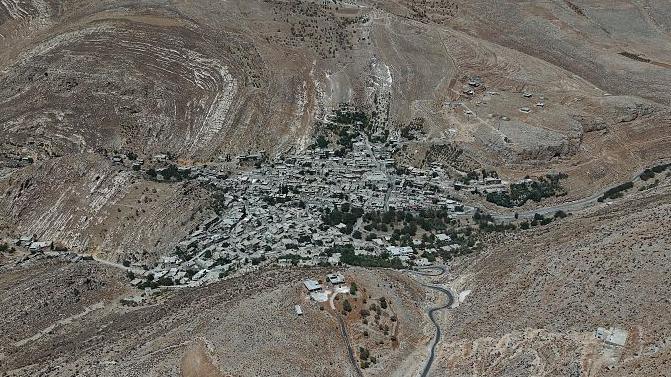
On 22 August 2026, Israel launched a missile strike on the Syrian village of Beit Jinn, south‑west of Damascus, striking a civilian car and injuring several people. The Syrian government condemned the attack as a blatant violation of its sovereignty and international law, adding it was the second Israeli strike in a week. Israel’s military said it was targeting a terrorist who, according to the defence ministry, had been preparing attacks against Israeli soldiers. Washington criticised the strike as an unnecessary escalation, while Turkey remained unfazed by accusations that its troops might have been deployed to nearby airbases. The incident inflames already fragile relations among Israel, Syria, Turkey and the United States, as Israel continues to navigate threats from its eastern and southern borders amid an increasingly complex regional security environment.
Syria condemned an Israeli missile strike near Damascus on 22 August 2026, declaring the attack a violation of both its sovereignty and international law. The hit was aimed at the village of Beit Jinn, southwest of the capital, and reportedly struck a civilian vehicle, injuring several residents.
This incident marks the second Israeli strike against Syrian territory in a span of seven days. Syrian officials called the attack a “violation” of its territorial integrity, while the Israeli army issued a statement on social media claiming it targeted a “terrorist” who was preparing attacks posed a direct threat to Israeli soldiers. The Israeli defence minister countered claims that the strike was pre‑planned with “accurate intelligence” about Turkey’s intentions in the region.
The broader context is a series of flare‑ups in the region. Earlier this week, Israel struck a military airbase near the Turkish border, prompting numerous diplomatic reactions. The United States, for the first time, publicly rebuked Israel for what Washington described as an “unnecessary escalation” that does not promote regional stability. Turkish officials have explicitly denied any threat to their forces, citing no troop movements to the Al‑Duhur airbase after the strike.
The Syrian government has been working to rebuild its military infrastructure after the 2024 overthrow of President Bashar al‑Assad. Concurrently, the country seeks closer ties with Western allies, a move that has drawn eyebrows from Israel, which remains wary of the region’s shifting political landscape. Syrian leader Khaled al‑Sharaa has visited Washington and hosted a historic summit with U.S. officials in 2025, signalling an intent to reposition Syria on the global stage.
The latest strike underscores the volatile nature of Israel‑Syria relations amid ongoing geopolitical tensions amongst Turkey, the United States and other regional actors. The incident could foster further confrontations, raising questions about the stability of the Middle East and the implementation of international humanitarian law.