In brief
On 24 June, twin magnitude‑7.5 earthquakes shook Caraballeda, Venezuela, collapsing a 10‑storey building where 12‑year‑old Fabiana Morales was trapped. Surrounded by rubble for 32 hours, she endured pain and claustrophobia but kept herself aware by eating ketchup and grated cheese. Her mother, Karina Blanco, and volunteer Viktor fought through debris, finally opening a tunnel that pulled Fabiana free at 2 a.m. The rescue highlighted both human resilience and the heavy toll of the disaster, which has left over 3,300 dead and tens of thousands missing.
On 24 June 2026, two twin magnitude‑7.5 earthquakes slammed into Caraballeda, a coastal town in Venezuela’s La Guaira state, pulverizing a 10‑story apartment building and trapping its occupants inside a crater of concrete and plaster.
At the time of the tremors, Fabiana Morales, 12, was in the bedroom of her mother’s flat, when the walls collapsed around her. The building top‑pled like a house of cards, burying Fabiana face‑up, her ceiling almost touching her nose, the debris surrounding her like a silo. That night she found, amid the rubble, a small bottle of ketchup and some grated cheese – the only items that might keep her awake. She clung to the wounds from broken glass, scratched her forehead and pressed the face of a piece of meat against her tongue, describing the laughter of the heat and the grit of the day in a video that was later used in the rescue.
For thirty‑two harrowing hours, Fabiana’s world became a claustrophobic dark where sound was muffled by stone and muscle was seized by pain. For a brief moment, her mind flickered between terror and reluctant calm – a shock reaction that allowed her to survive. As the rescuers reached out, the first nurse to arrive could not hear her, but then a volunteer named Viktor called out across the rubble, and Fabiana answered, “Apartment – Ritamar Palace. There is no light. I am alone. Something, please help.” When the doors cracked open, her muffled voice filled the night: “My daughter is alive.”
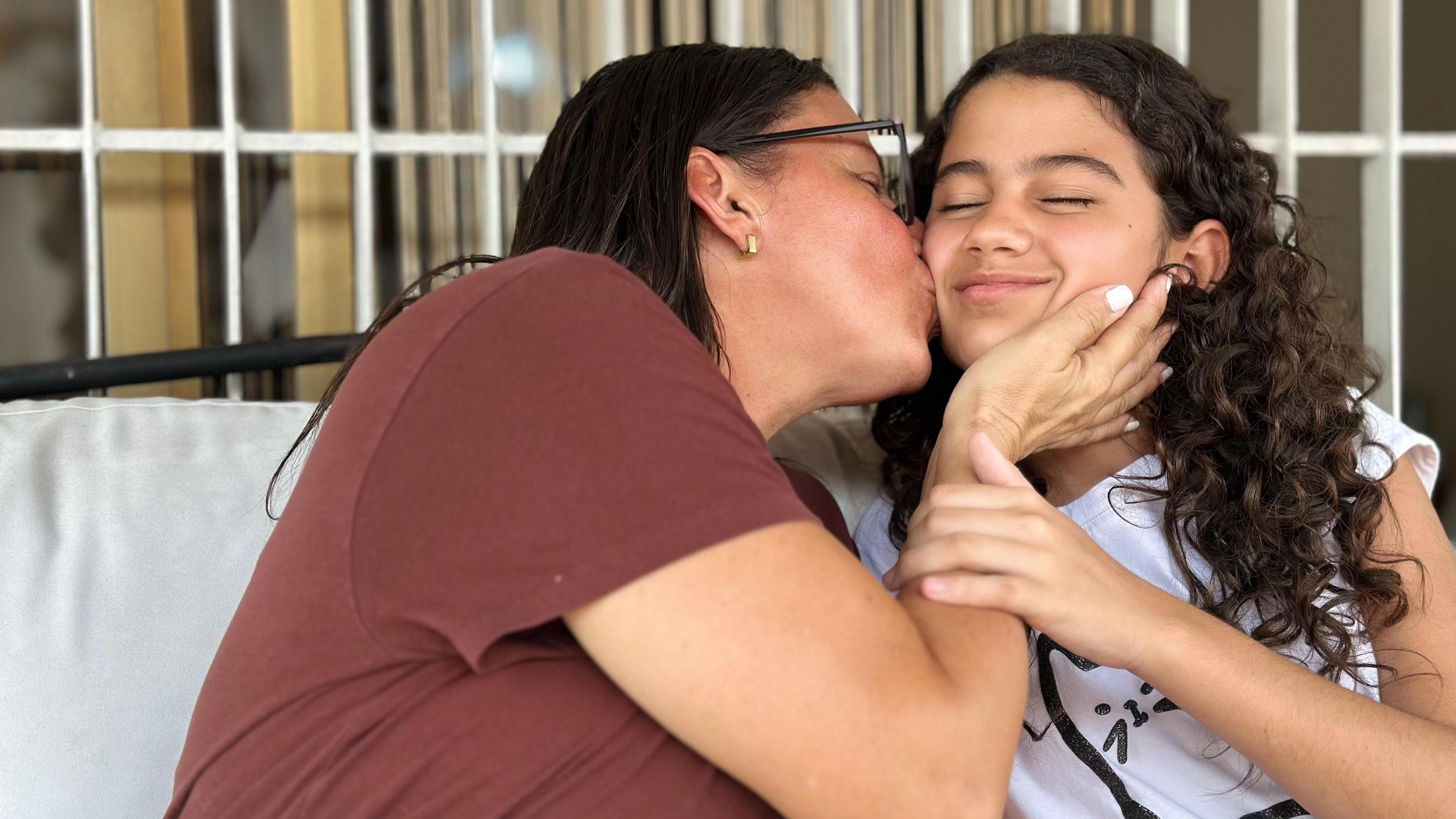
Karina Blanco, Fabiana’s mother, watched an incomplete wall grow closer and closer to her daughter’s trembling outline, knowing that the earlier attempts by local firefighters had left her with a bleak sea‐of‑dead‑hidden‑thumps. At around 2 a.m. on the following day, volunteers finally managed to open a tunnel wide enough for Fabiana to crawl out. Her 12‑year‑old body, wrapped in blood‑stained clothes and still clutching the remnants of a breakfast snack, collapsed into her mother’s arms, weeping among screams of relief from the rescuers who had wielded torches, axes, and sheer will. “It felt like a dream,” Fabiana said when she finally stepped into the light. “I can see my family, but the building is gone.”
Only three of the 50 residents of the collapsed building survived alive – all of them in the younger age bracket, highlights that the quake not only broke the bricks but shattered hours of a community’s hope. Besides a fractured left foot, A few scratches, bruises, and Fabiana’s fear for her own life are the only injuries she reports now; she has returned to her grandmother’s home to start a new chapter of life.
“I was terrified lying down on my back, remembering being buried for a full day,” said Fabiana. “I feel sorrow for my neighbors and friends. It will take time, but we will recover.” Karina echoed the sentiment that while they have endured the most harrowing ordeal, the end of the disaster is not the last truth of survival. About 3,342 people have died in the earthquakes already, and the number of missing is still being updated as search teams extend their efforts across the region.
For now, the strange feeling of a teenage girl surviving 32 hours in the earth’s thin crust has turned into a moving story of hope and community, highlighting that amidst catastrophic collapse lies human endurance, compassion and the importance of immediate action.