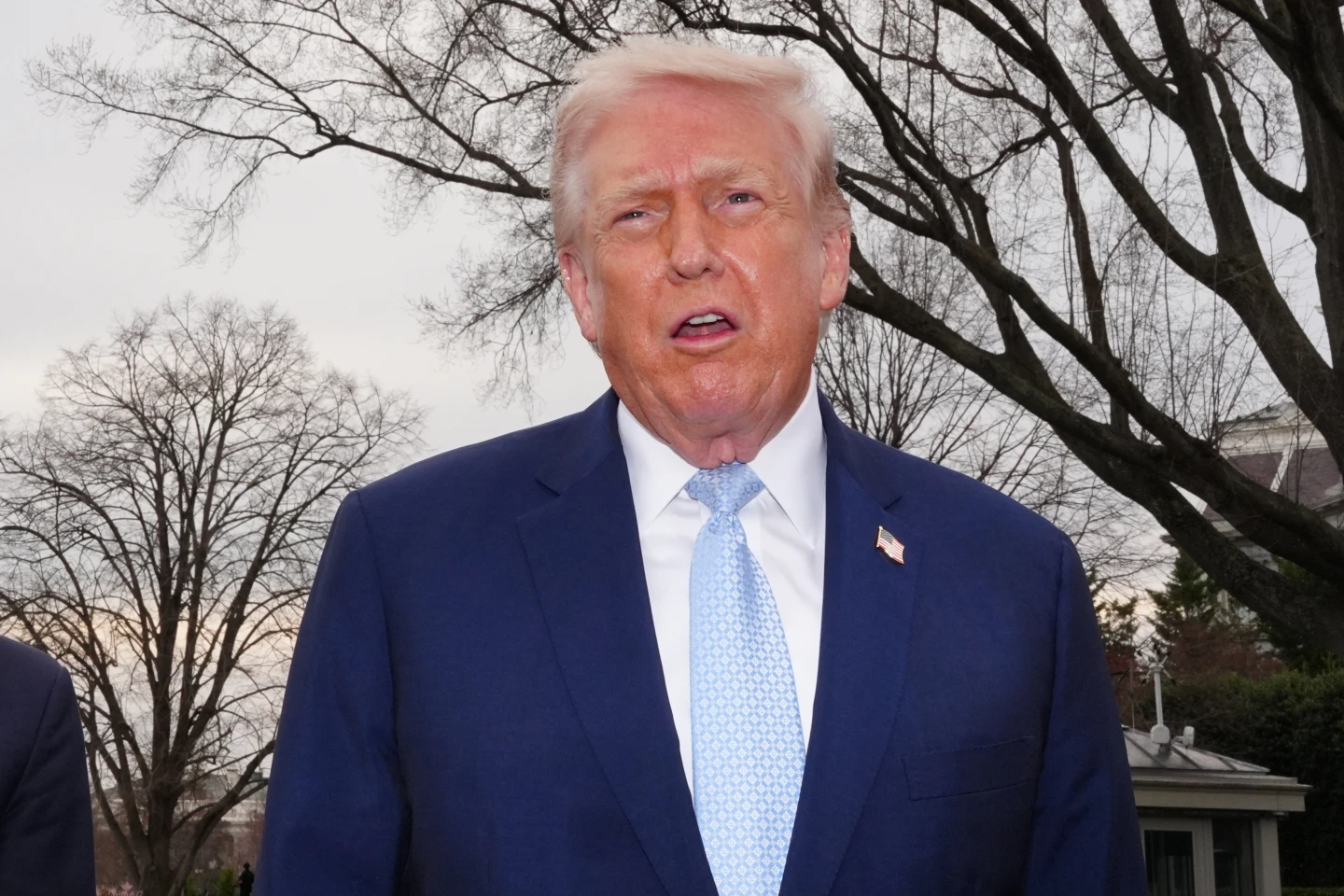
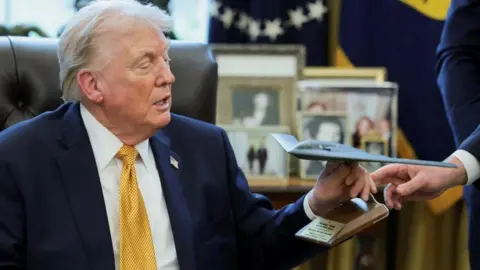
US President Donald Trump has attracted condemnation from health experts after he sought to claim that there was a link between the widely used painkiller Tylenol and autism.
Accompanied by his Health Secretary Robert F Kennedy Jr, Trump stated that doctors would soon be advised not to recommend the drug—also known as paracetamol in some countries—to pregnant women. Medical experts criticized these claims, with the American College of Obstetricians and Gynaecologists labeling the announcement as 'unsettling' and 'not based on reliable data'. The UK's National Autism Society also described Trump's statement as 'dangerous, anti-science, and irresponsible.'
During the event, Trump presented statistics suggesting autism diagnoses in the US have rapidly escalated over the past two decades. He claimed the diagnosis rate has increased from about 'one in 10,000' eighteen years ago to 'one in 31' by 2025. The latter statistic is indeed accurate according to 2022 data from the Centers for Disease Control and Prevention (CDC).
However, experts argue that the increase cited by Trump is misleading. In 2006, the CDC reported a rate of 1 in 110, with a slightly lower rate of 1 in 88 recorded in 2008. Most agree that the rising rates of autism are largely attributable to improved diagnostic criteria and heightened awareness rather than an actual increase in cases.
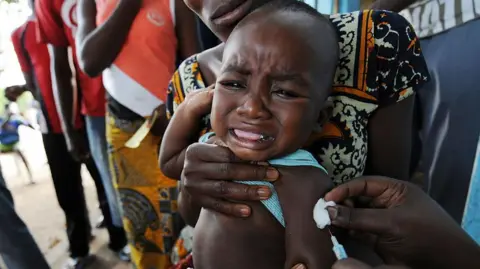
Addressing the MMR vaccine, Trump suggested that vaccinations should be administered separately to avoid problems that may arise when given as a combination shot. Experts warn this could lead to a resurgence of diseases like measles due to vaccine hesitance spurred by unfounded claims.
The claims Trump made were reminiscent of discredited assertions made by British doctor Andrew Wakefield in 1998, which linked the MMR vaccine to autism but were later disproven. Numerous studies have consistently found no correlation between the MMR vaccine and autism, including a 2019 study from Denmark examining over half a million children.
Trump also referred to the Amish community, stating they have 'virtually no autism' and linking it to lower Tylenol use. However, research into autism prevalence within the Amish is limited and inconclusive. One study from 2010 found autism in approximately 1 in 271 Amish children, prompting skepticism about the validity of Trump’s assertion.
Analysis of Trump’s repeated assertions around autism suggests a pattern of reliance on unverified claims. While he has expressed concerns about rising autism rates for nearly two decades, medical authorities remain steadfast in their adherence to science-based practices, emphasizing that vaccines are safe and effective.