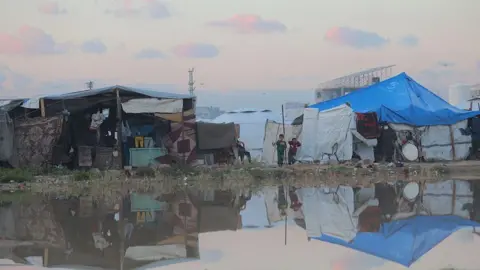
Heavy rains over the last week have severely worsened the living conditions for displaced Palestinians in the Gaza Strip, according to reports from UN agencies.
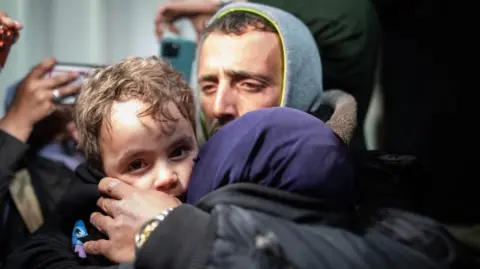
Jonathan Crickx, a spokesperson for UNICEF, described the conditions as horrendous, with reports of rain accumulation reaching 15cm (6in) near their office. The report raises alarms primarily concerning children living in tents and makeshift shelters, fearing they could fall victim to hypothermia and other related illnesses.
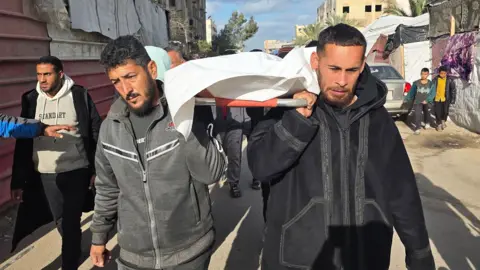
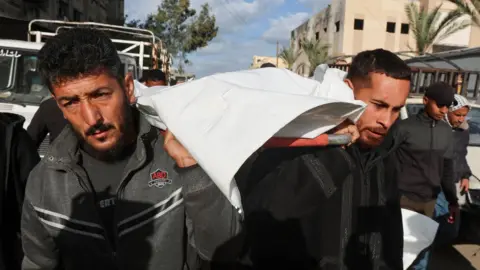
In response to the weather, Gaza's Hamas-run health ministry has confirmed the death of a baby from hypothermia and at least 11 others due to building collapses prompted by the flooding.
Despite UN agencies increasing the delivery of tents, blankets, and clothes since a ceasefire began nine weeks ago, they report that aid levels remain inadequate. They estimate that more than 40 designated emergency shelters have significantly flooded, displacing more individuals once again.
UNICEF's Crickx recounts driving on Wednesday morning and witnessing people attempting to bail out water from their flooded shelters, expressing deep concern for the health of children, especially as temperatures hover around 7-8°C (45-46°F) at night.
Efforts have increased to supply humanitarian aid during the ceasefire, but the demands appear to vastly outstrip the available provisions. While UNICEF has distributed winter clothing kits and blankets, there remains an urgent need for more comprehensive assistance.
The recent weather has exacerbated an already critical situation for families whose homes were damaged or destroyed in the ongoing conflict. As many as 1 million people have been living in temporary shelters—many with few to no changes of clothing—experiencing repeated displacements amid the protracted violence.
On another alarming note, Gaza's health ministry reported the death of baby Mohammed Abu al-Khair due to hypothermia and the additional deaths following structural collapses from the adverse weather conditions.
Furthermore, International Committee of the Red Cross underscored the urgent need for sustained humanitarian efforts, emphasizing that assistance must extend beyond immediate needs to address long-term recovery and rebuilding of critical infrastructure.
However, the Israeli military body overseeing Gaza's borders refutes claims regarding deliberate restrictions on aid, asserting that a significant amount of humanitarian supplies is entering daily.
As this humanitarian crisis unfolds amidst continued violence, families are calling for world intervention to rebuild and restore stability, urging for long-term solutions rather than temporary relief.